AKAP5, Rabbit, Polyclonal Antibody, Abnova™
Manufacturer: Abnova Corporation
Select a Size
| Pack Size | SKU | Availability | Price |
|---|---|---|---|
| Each of 1 | 89-119-012-Each-of-1 | In Stock | ₹ 55,892.00 |
89-119-012 - Each of 1
In Stock
Quantity
1
Base Price: ₹ 55,892.00
GST (18%): ₹ 10,060.56
Total Price: ₹ 65,952.56
Antigen
AKAP5
Classification
Polyclonal
Description
Rabbit polyclonal antibody raised against synthetic peptide of AKAP5.
Formulation
In PBS, pH 7.4 (150mM NaCl, 0.02% sodium azide, 50% glycerol)
Gene Accession No.
P24588
Gene Symbols
AKAP5
Immunogen
A synthetic peptide corresponding to N-terminus of human AKAP5.
Regulatory Status
RUO
Gene ID (Entrez)
9495
Target Species
Human
Form
Liquid
Applications
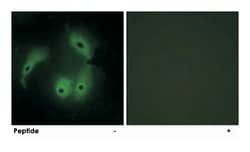
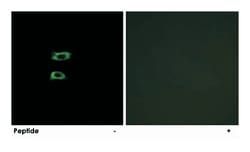
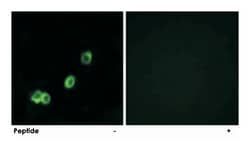
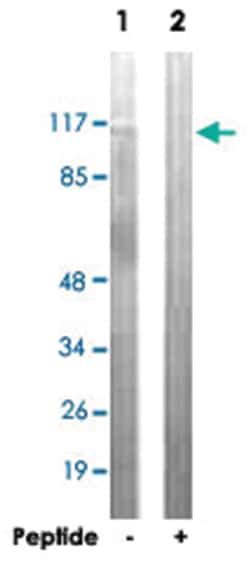
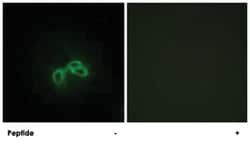
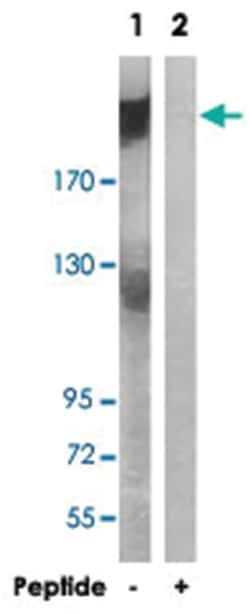
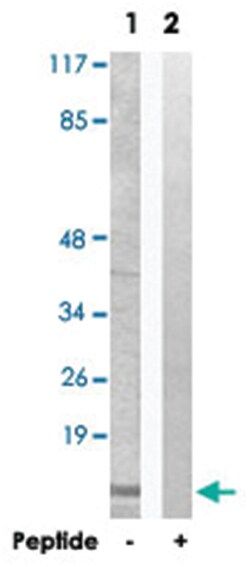
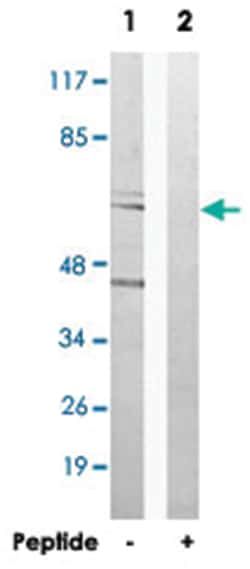
Immunofluorescence, Western Blot
Conjugate
Unconjugated
Dilution
Western Blot (1:500-1:1000) Immunofluorescence (1:500-1:1000) ELISA (1:10000) The optimal working dilution should be determined by the end user.
Gene
AKAP5
Gene Alias
AKAP75/AKAP79/H21
Host Species
Rabbit
Quantity
100 μg
Primary or Secondary
Primary
Test Specificity
This antibody detects endogenous levels of total AKAP5 protein.
Content And Storage
Store at -20°C.Aliquot to avoid repeated freezing and thawing.
Related Products
Description
- The A-kinase anchor proteins (AKAPs) are a group of structurally diverse proteins, which have the common function of binding to the regulatory subunit of protein kinase A (PKA) and confining the holoenzyme to discrete locations within the cell
- This gene encodes a member of the AKAP family
- The encoded protein binds to the RII-beta regulatory subunit of PKA, and also to protein kinase C and the phosphatase calcineurin
- It is predominantly expressed in cerebral cortex and may anchor the PKA protein at postsynaptic densities (PSD) and be involved in the regulation of postsynaptic events
- It is also expressed in T lymphocytes and may function to inhibit interleukin-2 transcription by disrupting calcineurin-dependent dephosphorylation of NFAT
- [provided by RefSeq