AKAP14, Rabbit, Polyclonal Antibody, Abnova™
Manufacturer: Abnova Corporation
Select a Size
| Pack Size | SKU | Availability | Price |
|---|---|---|---|
| Each of 1 | 89-119-062-Each-of-1 | In Stock | ₹ 55,892.00 |
89-119-062 - Each of 1
In Stock
Quantity
1
Base Price: ₹ 55,892.00
GST (18%): ₹ 10,060.56
Total Price: ₹ 65,952.56
Antigen
AKAP14
Classification
Polyclonal
Description
Rabbit polyclonal antibody raised against synthetic peptide of AKAP14.
Formulation
In PBS, pH 7.4 (150mM NaCl, 0.02% sodium azide, 50% glycerol)
Gene Accession No.
Q86UN6
Gene Symbols
AKAP14
Immunogen
A synthetic peptide corresponding to internal of human AKAP14.
Regulatory Status
RUO
Gene ID (Entrez)
158798
Target Species
Human
Form
Liquid
Applications
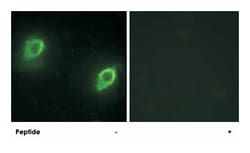
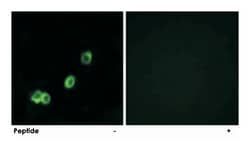
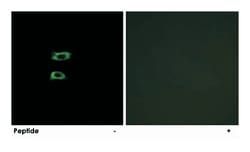
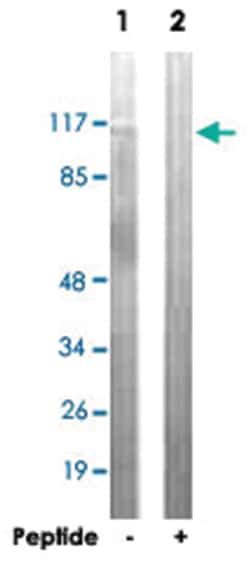
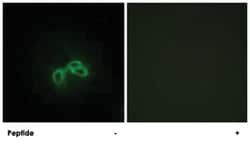
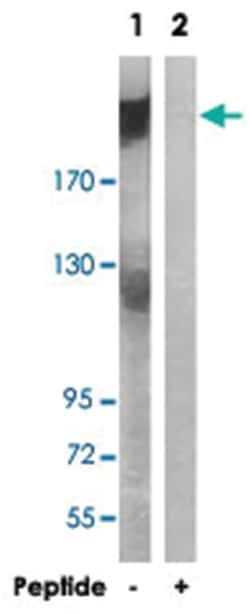
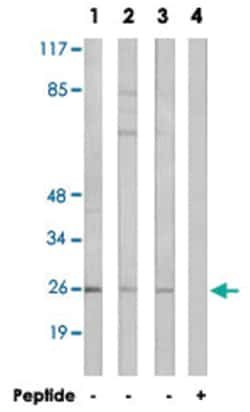
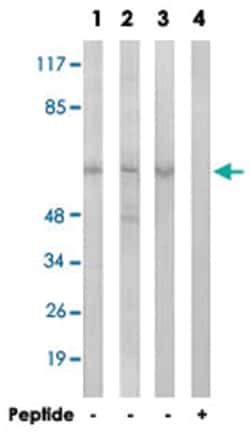
Immunofluorescence, Western Blot
Conjugate
Unconjugated
Dilution
Western Blot (1:500-1:1000) Immunofluorescence (1:500-1:1000) ELISA (1:5000) The optimal working dilution should be determined by the end user.
Gene
AKAP14
Gene Alias
AKAP28
Host Species
Rabbit
Quantity
100 μg
Primary or Secondary
Primary
Test Specificity
This antibody detects endogenous levels of total AKAP14 protein.
Content And Storage
Store at -20°C.Aliquot to avoid repeated freezing and thawing.
Related Products
Description
- The A-kinase anchor proteins (AKAPs) are a group of structurally diverse proteins, which have the common function of binding to the regulatory subunit of protein kinase A (PKA) and confining the holoenzyme to discrete locations within the cell
- This gene encodes a member of the AKAP family
- The protein anchors PKA in ciliary axonemes and, in this way, may play a role in regulating ciliary beat frequency
- Alternate transcriptional splice variants, encoding different isoforms, have been characterized
- [provided by RefSeq