89-123-148
TIMM8A, Mouse, Clone: 2D12, Abnova™
Manufacturer: Abnova Corporation
Select a Size
| Pack Size | SKU | Availability | Price |
|---|---|---|---|
| Each of 1 | 89-123-148-Each-of-1 | In Stock | ₹ 42,898.00 |
89-123-148 - Each of 1
In Stock
Quantity
1
Base Price: ₹ 42,898.00
GST (18%): ₹ 7,721.64
Total Price: ₹ 50,619.64
Antigen
TIMM8A
Classification
Monoclonal
Conjugate
Unconjugated
Formulation
PBS with no preservative; pH 7.4
Gene Accession No.
NM_004085
Gene Symbols
TIMM8A
Immunogen
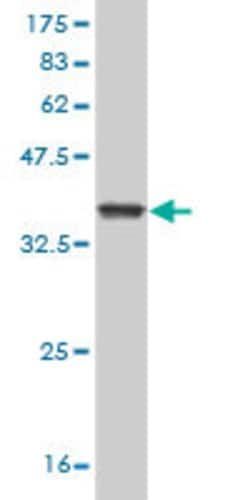
TIMM8A (NP_004076, 9 a.a. ∼ 97 a.a) partial recombinant protein with GST tag. MW of the GST tag alone is 26 KDa.
Quantity
100 μg
Primary or Secondary
Primary
Target Species
Human
Product Type
Antibody
Isotype
IgG2a κ
Applications
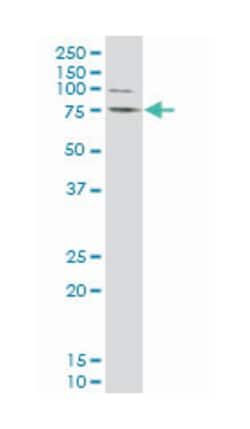
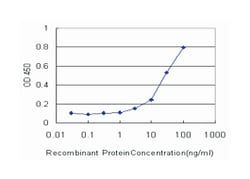
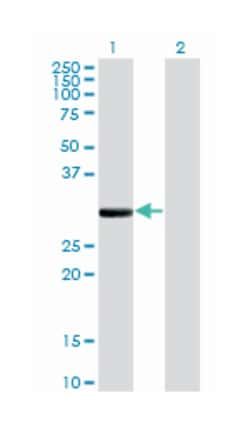
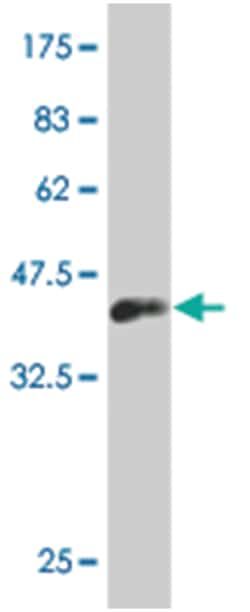
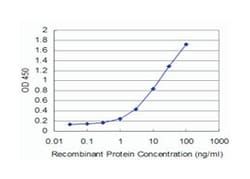
ELISA, Western Blot
Clone
2D12
Description
Mouse monoclonal antibody raised against a partial recombinant TIMM8A.
Gene
TIMM8A
Gene Alias
DDP/DDP1/DFN1/MGC12262/MTS
Host Species
Mouse
Purification Method
Affinity chromatography
Regulatory Status
RUO
Gene ID (Entrez)
1678
Content And Storage
Store at -20°C or lower. Aliquot to avoid repeated freezing and thawing.
Form
Liquid
Related Products

Description
- This translocase is involved in the import and insertion of hydrophobic membrane proteins from the cytoplasm into the mitochondrial inner membrane
- The gene is mutated in Mohr-Tranebjaerg syndrome/Deafness Dystonia Syndrome (MTS/DDS) and it is postulated that MTS/DDS is a mitochondrial disease caused by a defective mitochondrial protein import system
- Defects in this gene also cause Jensen syndrome; an X-linked disease with opticoacoustic nerve atrophy and muscle weakness
- This protein, along with TIMM13, forms a 70kDa heterohexamer
- Alternative splicing results in multiple transcript variants encoding distinct isoforms Sequence: AAGLGAVDPQLQHFIEVETQKQRFQQLVHQMTELCWEKCMDKPGPKLDSRAEACFVNCVERFIDTSQFILNRLEQTQKSKPVFSESLSD