BAK1 Rabbit anti-Human, Polyclonal Antibody, Abnova™
Manufacturer: Abnova Corporation
Select a Size
| Pack Size | SKU | Availability | Price |
|---|---|---|---|
| Each of 1 | 89-126-101-Each-of-1 | In Stock | ₹ 53,133.00 |
89-126-101 - Each of 1
In Stock
Quantity
1
Base Price: ₹ 53,133.00
GST (18%): ₹ 9,563.94
Total Price: ₹ 62,696.94
Antigen
BAK1
Classification
Polyclonal
Description
Rabbit polyclonal antibody raised against synthetic peptide of BAK1.
Formulation
In PBS (0.09% sodium azide)
Gene Accession No.
NP_001179;Q16611
Gene Symbols
BAK1
Immunogen
A synthetic peptide (conjugated with KLH) corresponding to N-terminus of human BAK1.
Quantity
400 μL
Primary or Secondary
Primary
Test Specificity
BH3 Domain Specific
Content And Storage
Store at 4°C. For long term storage store at -20°C.Aliquot to avoid repeated freezing and thawing.
Applications
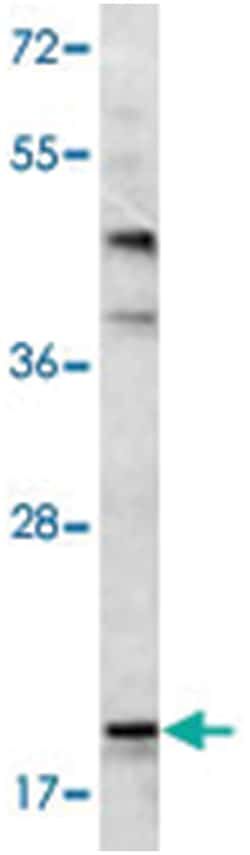
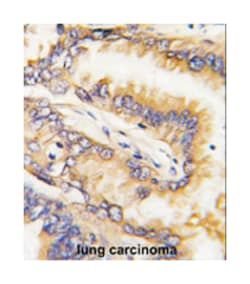
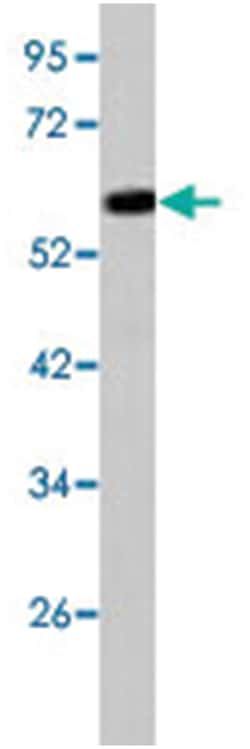
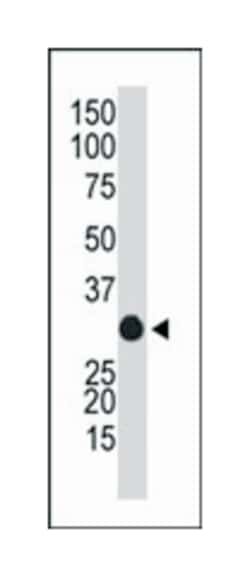
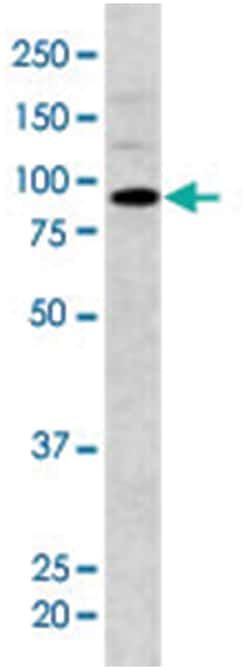
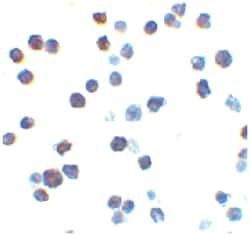
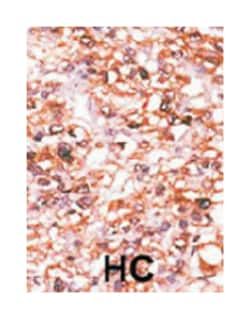
ELISA, Immunohistochemistry (Paraffin), Western Blot
Conjugate
Unconjugated
Dilution
Western Blot (1:1000) Immunohistochemistry (1:50-100) The optimal working dilution should be determined by the end user.
Gene
BAK1
Gene Alias
BAK/BAK-LIKE/BCL2L7/CDN1/MGC117255/MGC3887
Host Species
Rabbit
Purification Method
Protein G purification
Regulatory Status
RUO
Gene ID (Entrez)
578
Target Species
Human
Form
Liquid
Related Products

Description
- The protein encoded by this gene belongs to the BCL2 protein family
- BCL2 family members form oligomers or heterodimers and act as anti- or pro-apoptotic regulators that are involved in a wide variety of cellular activities
- This protein localizes to mitochondria, and functions to induce apoptosis
- It interacts with and accelerates the opening of the mitochondrial voltage-dependent anion channel, which leads to a loss in membrane potential and the release of cytochrome c
- This protein also interacts with the tumor suppressor P53 after exposure to cell stress
- [provided by RefSeq