ANPEP, Rabbit, Polyclonal Antibody, Abnova™
Manufacturer: Abnova Corporation
Select a Size
| Pack Size | SKU | Availability | Price |
|---|---|---|---|
| Each of 1 | 89-126-843-Each-of-1 | In Stock | ₹ 70,488.00 |
89-126-843 - Each of 1
In Stock
Quantity
1
Base Price: ₹ 70,488.00
GST (18%): ₹ 12,687.84
Total Price: ₹ 83,175.84
Antigen
ANPEP
Classification
Polyclonal
Conjugate
Unconjugated
Dilution
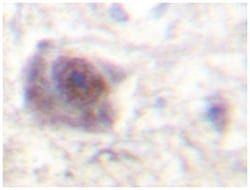
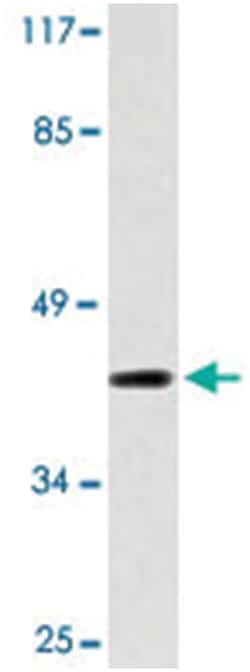
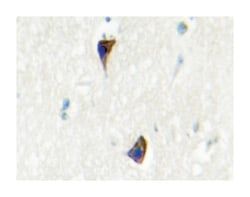
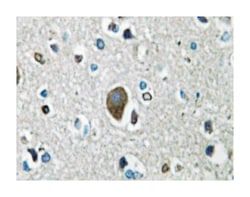
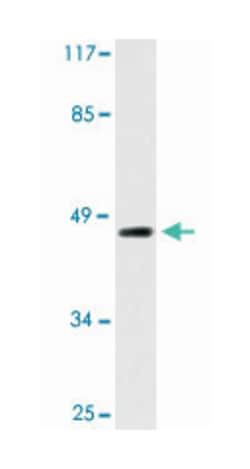
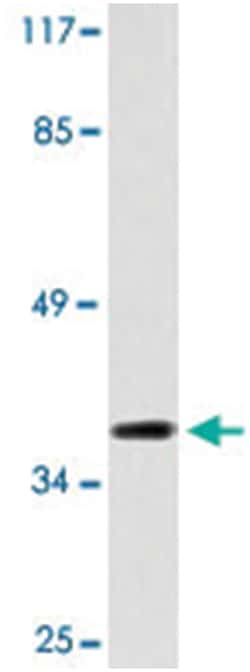
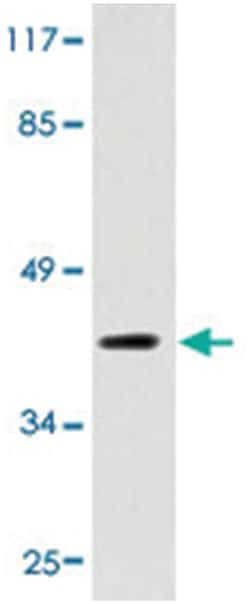
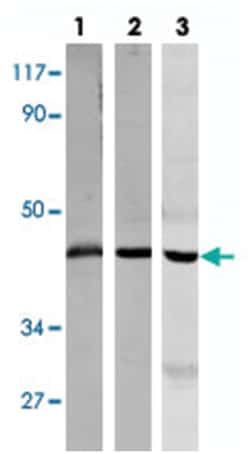
Western Blot (1:500-1:1000) Immunohistochemistry (1:50-1:200) The optimal working dilution should be determined by the end user.
Gene
ANPEP
Gene Symbols
ANPEP
Immunogen
A synthetic peptide corresponding to ANPEP.
Quantity
100 μL
Primary or Secondary
Primary
Test Specificity
ANPEP polyclonal antibody detects endogenous levels of ANPEP protein.
Content And Storage
Store at 4°C. For long term storage store at -20°C.Aliquot to avoid repeated freezing and thawing.
Applications
Immunohistochemistry (PFA fixed), Western Blot
Concentration
1 mg/mL
Description
Rabbit polyclonal antibody raised against synthetic peptide of ANPEP.
Formulation
In PBS, pH 7.2 (0.05% sodium azide)
Gene Alias
APN/CD13/LAP1/PEPN/gp150/p150
Host Species
Rabbit
Purification Method
Affinity purification
Regulatory Status
RUO
Gene ID (Entrez)
290
Target Species
Human
Form
Liquid
Related Products
Description
- Aminopeptidase N is located in the small-intestinal and renal microvillar membrane, and also in other plasma membranes
- In the small intestine aminopeptidase N plays a role in the final digestion of peptides generated from hydrolysis of proteins by gastric and pancreatic proteases
- Its function in proximal tubular epithelial cells and other cell types is less clear
- The large extracellular carboxyterminal domain contains a pentapeptide consensus sequence characteristic of members of the zinc-binding metalloproteinase superfamily
- Sequence comparisons with known enzymes of this class showed that CD13 and aminopeptidase N are identical
- The latter enzyme was thought to be involved in the metabolism of regulatory peptides by diverse cell types, including small intestinal and renal tubular epithelial cells, macrophages, granulocytes, and synaptic membranes from the CNS
- Human aminopeptidase N is a receptor for one strain of human coronavirus that is an important cause of upper respiratory tract infections
- Defects in this gene appear to be a cause of various types of leukemia or lymphoma
- [provided by RefSeq