89-132-563
LCP2, Goat, Polyclonal Antibody, Abnova™
Manufacturer: Abnova Corporation
Select a Size
| Pack Size | SKU | Availability | Price |
|---|---|---|---|
| Each of 1 | 89-132-563-Each-of-1 | In Stock | ₹ 70,399.00 |
89-132-563 - Each of 1
In Stock
Quantity
1
Base Price: ₹ 70,399.00
GST (18%): ₹ 12,671.82
Total Price: ₹ 83,070.82
Antigen
LCP2
Classification
Polyclonal
Conjugate
Unconjugated
Dilution
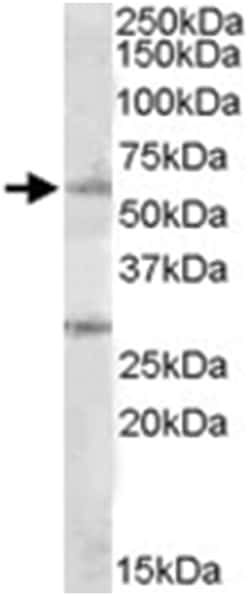
ELISA (1:32000) Western Blot (0.5-2 ug/mL) The optimal working dilution should be determined by the end user.
Gene
LCP2
Gene Symbols
LCP2
Immunogen
A synthetic peptide corresponding to human LCP2.
Quantity
100 μg
Primary or Secondary
Primary
Target Species
Human
Form
Liquid
Applications
ELISA, Western Blot
Concentration
0.5 mg/mL
Description
Goat polyclonal antibody raised against synthetic peptide of LCP2.
Formulation
In Tris saline, pH 7.3 (0.5% BSA, 0.02% sodium azide)
Gene Alias
SLP-76/SLP76
Host Species
Goat
Purification Method
Antigen affinity purification
Regulatory Status
RUO
Gene ID (Entrez)
3937
Content And Storage
Store at -20°C.Aliquot to avoid repeated freezing and thawing.
Related Products
Description
- SLP-76 was originally identified as a substrate of the ZAP-70 protein tyrosine kinase following T cell receptor (TCR) ligation in the leukemic T cell line Jurkat
- The SLP-76 locus has been localized to human chromosome 5q33 and the gene structure has been partially characterized in mice
- The human and murine cDNAs both encode 533 amino acid proteins that are 72% identical and comprised of three modular domains
- The NH2-terminus contains an acidic region that includes a PEST domain and several tyrosine residues which are phosphorylated following TCR ligation
- SLP-76 also contains a central proline-rich domain and a COOH-terminal SH2 domain
- A number of additional proteins have been identified that associate with SLP-76 both constitutively and inducibly following receptor ligation, supporting the notion that SLP-76 functions as an adaptor or scaffold protein
- Studies using SLP-76 deficient T cell lines or mice have provided strong evidence that SLP-76 plays a positive role in promoting T cell development and activation as well as mast cell and platelet function
- [provided by RefSeq Sequence: ALRNVPFRSEV-C