PAX6, Goat, Polyclonal Antibody, Abnova™
Manufacturer: Abnova Corporation
Select a Size
| Pack Size | SKU | Availability | Price |
|---|---|---|---|
| Each of 1 | 89-133-100-Each-of-1 | In Stock | ₹ 70,399.00 |
89-133-100 - Each of 1
In Stock
Quantity
1
Base Price: ₹ 70,399.00
GST (18%): ₹ 12,671.82
Total Price: ₹ 83,070.82
Antigen
PAX6
Classification
Polyclonal
Conjugate
Unconjugated
Dilution
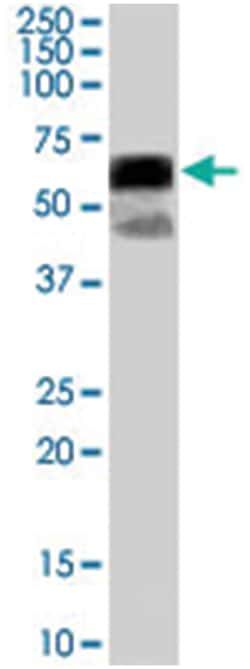
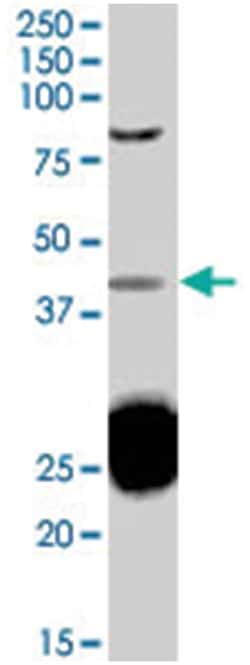
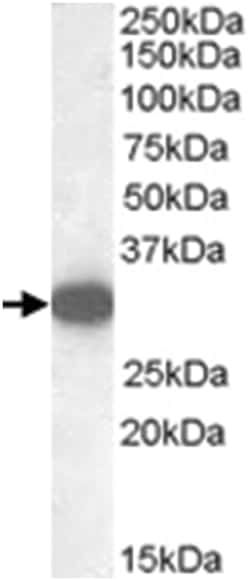
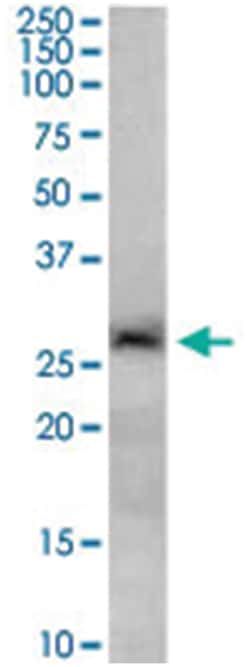
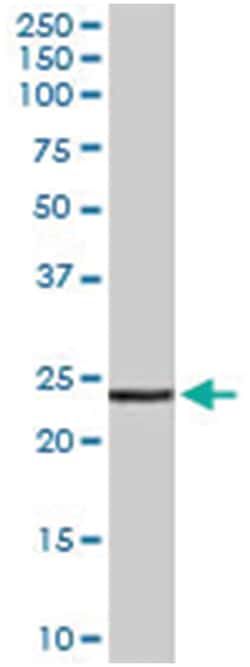
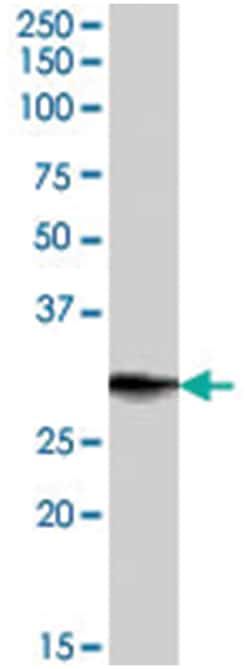
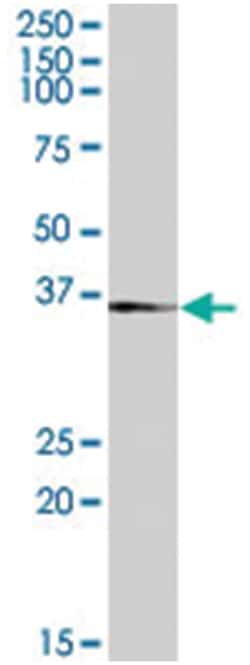
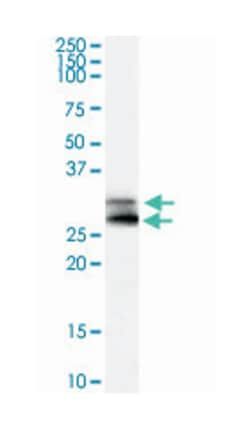
ELISA (1:32000) Western Blot (0.3-1 ug/mL) The optimal working dilution should be determined by the end user.
Gene
PAX6
Gene Symbols
PAX6
Immunogen
A synthetic peptide corresponding to human PAX6.
Quantity
100 μg
Primary or Secondary
Primary
Test Specificity
This antibody is expected to recognize both reported isoforms (NP_000271.1 and NP_001595.2).
Content And Storage
Store at -20°C.Aliquot to avoid repeated freezing and thawing.
Applications
ELISA, Western Blot
Concentration
0.5 mg/mL
Description
Goat polyclonal antibody raised against synthetic peptide of PAX6.
Formulation
In Tris saline, pH 7.3 (0.5% BSA, 0.02% sodium azide)
Gene Alias
AN/AN2/D11S812E/MGC17209/MGDA/WAGR
Host Species
Goat
Purification Method
Antigen affinity purification
Regulatory Status
RUO
Gene ID (Entrez)
5080
Target Species
Human
Form
Liquid
Related Products
Description
- This gene encodes paired box gene 6, one of many human homologs of the Drosophila melanogaster gene prd
- In addition to the hallmark feature of this gene family, a conserved paired box domain, the encoded protein also contains a homeo box domain
- Both domains are known to bind DNA, and function as regulators of gene transcription
- This gene is expressed in the developing nervous system, and in developing eyes
- Mutations in this gene are known to cause ocular disorders such as aniridia and Peter's anomaly
- Alternatively spliced transcript variants encoding either the same or different isoform have been found for this gene
- [provided by RefSeq] Sequence: C-REEKLRNQRRQASN