BDNF Rabbit anti-Human, Mouse, Rat, Polyclonal Antibody, Abnova™
Manufacturer: Abnova Corporation
Select a Size
| Pack Size | SKU | Availability | Price |
|---|---|---|---|
| Each of 1 | 89-133-529-Each-of-1 | In Stock | ₹ 68,886.00 |
89-133-529 - Each of 1
In Stock
Quantity
1
Base Price: ₹ 68,886.00
GST (18%): ₹ 12,399.48
Total Price: ₹ 81,285.48
Antigen
BDNF
Classification
Polyclonal
Description
Rabbit polyclonal antibody raised against synthetic peptide of BDNF.
Formulation
Lyophilized from 0.9mg NaCl, 0.2mg Na2HPO4(5mg BSA, 0.05mg sodium azide, 0.05mg Thimerosal)
Gene Alias
MGC34632
Host Species
Rabbit
Purification Method
Immunoaffinity purification
Regulatory Status
RUO
Gene ID (Entrez)
627
Target Species
Human, Mouse, Rat
Form
Lyophilized
Applications
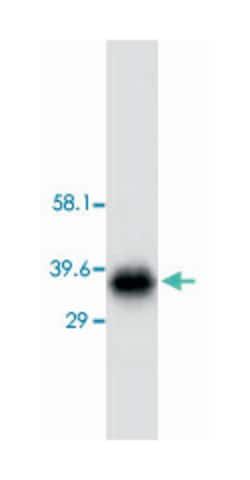
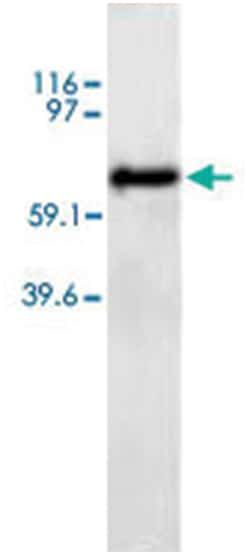
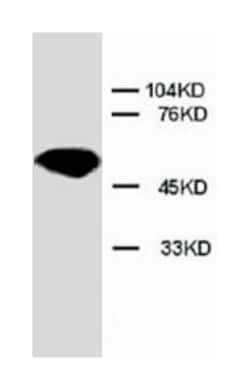
Western Blot
Conjugate
Unconjugated
Dilution
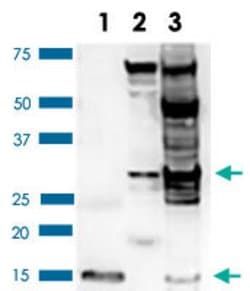
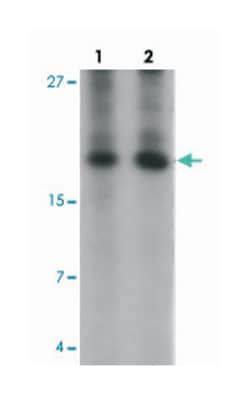
Western Blot (1-2 ug/mL) The optimal working dilution should be determined by the end user.
Gene
BDNF
Gene Symbols
BDNF
Immunogen
A synthetic peptide corresponding to amino acids at middle region of human BDNF.
Quantity
100 μg
Primary or Secondary
Primary
Test Specificity
Identical to the related rat and mouse sequence.
Content And Storage
Store at -20°C on dry atmosphere. After reconstitution with 200μL of deionized water and concentration will be 500μ/mL store at -20°C or lower. Aliquot to avoid repeated freezing and thawing.
Isotype
IgG
Related Products

Description
- The protein encoded by this gene is a member of the nerve growth factor family
- It is induced by cortical neurons, and is necessary for survival of striatal neurons in the brain
- Expression of this gene is reduced in both Alzheimer's and Huntington disease patients
- This gene may play a role in the regulation of stress response and in the biology of mood disorders
- Multiple transcript variants encoding distinct isoforms have been described for this gene
- [provided by RefSeq]