89-333-479
BMP4 Mouse anti-Human, Rat, Clone:3C11H8, Abnova™
Manufacturer: Abnova Corporation
Select a Size
| Pack Size | SKU | Availability | Price |
|---|---|---|---|
| Each of 1 | 89-333-479-Each-of-1 | In Stock | ₹ 60,787.00 |
89-333-479 - Each of 1
In Stock
Quantity
1
Base Price: ₹ 60,787.00
GST (18%): ₹ 10,941.66
Total Price: ₹ 71,728.66
Antigen
BMP4
Classification
Monoclonal
Conjugate
Unconjugated
Dilution
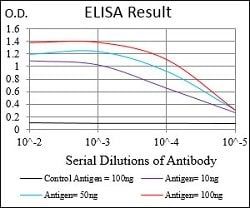
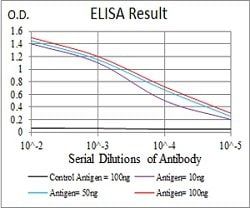
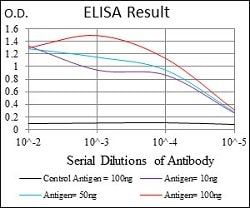
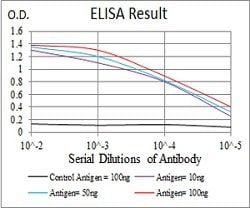
ELISA (1:10000)Western Blot (1:500-1:2000)ImmunohistochemistryImmunocytochemistry (1:100-1:500)Flow CytometryThe optimal working dilution should be determined by the end user.
Gene
BMP4
Host Species
Mouse
Quantity
100 μg
Target Species
Human, Rat
Product Type
Antibody
Isotype
IgG1
Applications
ELISA, Immunocytochemistry, Western Blot
Clone
3C11H8
Description
bone morphogenetic protein 4
Formulation
In PBS (0.05% sodium azide)
Gene Alias
BMP2B, BMP2B1, MCOPS6, ZYME
Immunogen
Recombinant protein corresponding to amino acid 277-408 of human BMP4 fromE. coli.
Gene ID (Entrez)
652
Content And Storage
Store at 4°C. For long term storage store at -20°C.Aliquot to avoid repeated freezing and thawing.
Form
Liquid
Related Products
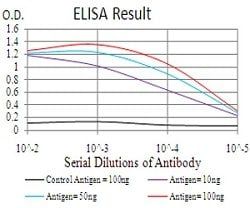
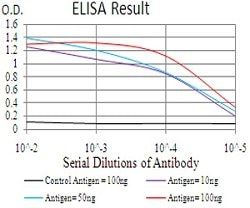
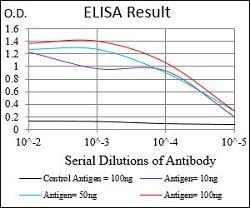
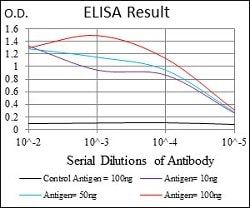
Description
- The protein encoded by this gene is a member of the bone morphogenetic protein family which is part of the transforming growth factor-beta superfamily
- The superfamily includes large families of growth and differentiation factors
- Bone morphogenetic proteins were originally identified by an ability of demineralized bone extract to induce endochondral osteogenesis in vivo in an extraskeletal site
- This particular family member plays an important role in the onset of endochondral bone formation in humans, and a reduction in expression has been associated with a variety of bone diseases, including the heritable disorder Fibrodysplasia Ossificans Progressiva
- Alternative splicing in the 5′ untranslated region of this gene has been described and three variants are described, all encoding an identical protein
- [provided by RefSeq]