89-933-733
CCND1 Mouse anti-Human, PE, Clone: SPM587, Abnova™
Manufacturer: Abnova Corporation
Select a Size
| Pack Size | SKU | Availability | Price |
|---|---|---|---|
| Each of 1 | 89-933-733-Each-of-1 | In Stock | ₹ 68,530.00 |
89-933-733 - Each of 1
In Stock
Quantity
1
Base Price: ₹ 68,530.00
GST (18%): ₹ 12,335.40
Total Price: ₹ 80,865.40
Antigen
CCND1
Classification
Monoclonal
Conjugate
PE
Dilution
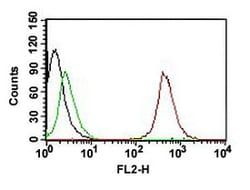
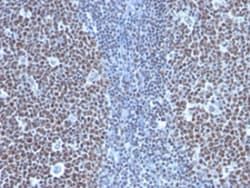
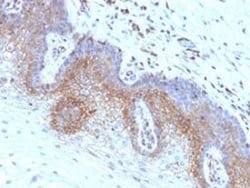
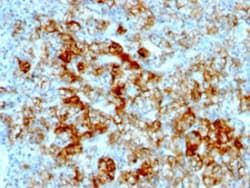
Flow Cytometry (5 uL per test per one million cells in 0.1 mL) Immunofluorescence (1:50-1:100) The optimal working dilution should be determined by the end user.
Gene Alias
BCL1/D11S287E/PRAD1/U21B31
Host Species
Mouse
Purification Method
Protein A/G purification
Regulatory Status
RUO
Gene ID (Entrez)
595
Content And Storage
Store at 4°C.
Isotype
IgG2a κ
Applications
Flow Cytometry, Immunofluorescence
Clone
SPM587
Description
Mouse monoclonal antibody raised against full length recombinant human CCND1.
Formulation
In PBS (0.05% BSA, 0.05% sodium azide).
Gene Symbols
CCND1
Immunogen
Recombinant protein corresponding to full length human CCND1.
Quantity
500 μL
Primary or Secondary
Primary
Target Species
Human
Form
Liquid
Related Products

Description
- The protein encoded by this gene belongs to the highly conserved cyclin family, whose members are characterized by a dramatic periodicity in protein abundance throughout the cell cycle
- Cyclins function as regulators of CDK kinases
- Different cyclins exhibit distinct expression and degradation patterns which contribute to the temporal coordination of each mitotic event
- This cyclin forms a complex with and functions as a regulatory subunit of CDK4 or CDK6, whose activity is required for cell cycle G1/S transition
- This protein has been shown to interact with tumor suppressor protein Rb and the expression of this gene is regulated positively by Rb
- Mutations, amplification and overexpression of this gene, which alters cell cycle progression, are observed frequently in a variety of tumors and may contribute to tumorigenesis
- [provided by RefSeq]