89-933-855
CD63 Mouse anti-Human, PE, Clone: SPM524, Abnova™
Manufacturer: Abnova Corporation
Select a Size
| Pack Size | SKU | Availability | Price |
|---|---|---|---|
| Each of 1 | 89-933-855-Each-of-1 | In Stock | ₹ 68,530.00 |
89-933-855 - Each of 1
In Stock
Quantity
1
Base Price: ₹ 68,530.00
GST (18%): ₹ 12,335.40
Total Price: ₹ 80,865.40
Antigen
CD63
Classification
Monoclonal
Conjugate
PE
Dilution
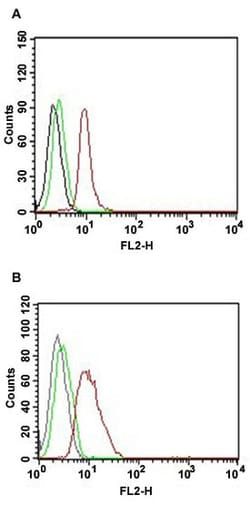
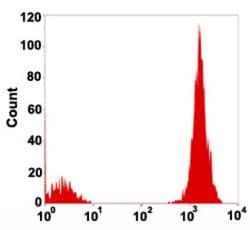
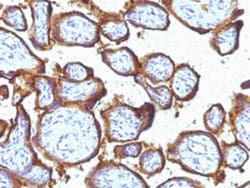
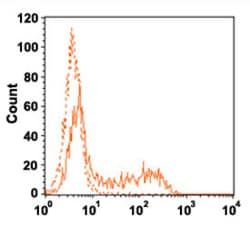
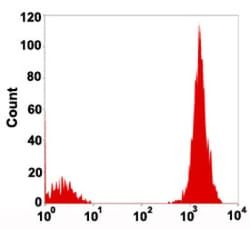
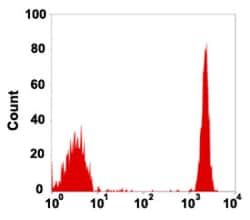
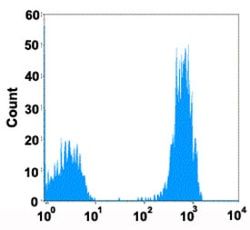
Flow Cytometry (5 uL per test per one million cells in 0.1 mL) Immunofluorescence (1:50-1:100) The optimal working dilution should be determined by the end user.
Gene Alias
LAMP-3/ME491/MLA1/OMA81H/TSPAN30
Host Species
Mouse
Purification Method
Protein A/G purification
Regulatory Status
RUO
Gene ID (Entrez)
967
Content And Storage
Store at 4°C.
Isotype
IgG1 κ
Applications
Flow Cytometry, Immunofluorescence
Clone
SPM524
Description
Mouse monoclonal antibody raised against native human CD63.
Formulation
In PBS (0.05% BSA, 0.05% sodium azide).
Gene Symbols
CD63
Immunogen
Smooth plasma membrane fraction of MeWo cells.
Quantity
500 μL
Primary or Secondary
Primary
Target Species
Human
Form
Liquid
Related Products

Description
- The protein encoded by this gene is a member of the transmembrane 4 superfamily, also known as the tetraspanin family
- Most of these members are cell-surface proteins that are characterized by the presence of four hydrophobic domains
- The proteins mediate signal transduction events that play a role in the regulation of cell development, activation, growth and motility
- This encoded protein is a cell surface glycoprotein that is known to complex with integrins
- It may function as a blood platelet activation marker
- Deficiency of this protein is associated with Hermansky-Pudlak syndrome
- Also this gene has been associated with tumor progression
- The use of alternate polyadenylation sites has been found for this gene
- Alternative splicing results in multiple transcript variants encoding different proteins
- [provided by RefSeq]