GPC3 Mouse anti-Human, Clone: 1G12, Abnova™
Manufacturer: Abnova Corporation
Select a Size
| Pack Size | SKU | Availability | Price |
|---|---|---|---|
| Each of 1 | 89-934-203-Each-of-1 | In Stock | ₹ 68,485.50 |
89-934-203 - Each of 1
In Stock
Quantity
1
Base Price: ₹ 68,485.50
GST (18%): ₹ 12,327.39
Total Price: ₹ 80,812.89
Antigen
GPC3
Classification
Monoclonal
Conjugate
Unconjugated
Dilution
Flow Cytometry (0.5-1 ug/106cells in 0.1 mL) Immunofluorescence (0.5-1 ug/mL) Immunohistochemistry (Formalin/PFA-fixed paraffin-embedded sections) (0.5-1 ug/mL) The optimal working dilution should be determined by the end user.
Gene Alias
DGSX/OCI-5/SDYS/SGB/SGBS/SGBS1
Host Species
Mouse
Purification Method
Protein A/G purification
Regulatory Status
RUO
Gene ID (Entrez)
2719
Content And Storage
Store at -20 to -80°C.Aliquot to avoid repeated freezing and thawing.
Isotype
IgG1 κ
Applications
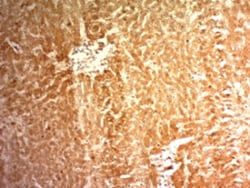
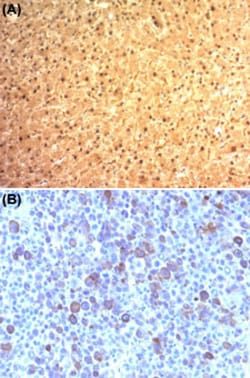
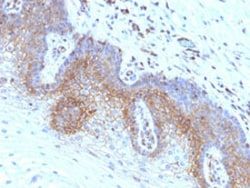
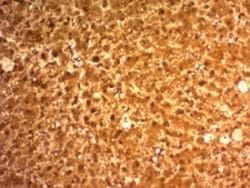
Flow Cytometry, Immunofluorescence, Immunohistochemistry (PFA fixed)
Clone
1G12
Description
Mouse monoclonal antibody raised against partial recombinant human GPC3.
Formulation
In 1mM PBS.
Gene Symbols
GPC3
Immunogen
Recombinant protein corresponding to amino acids 511-580 of human GPC3.
Quantity
100 μg
Primary or Secondary
Primary
Target Species
Human
Form
Liquid
Related Products

Description
- Cell surface heparan sulfate proteoglycans are composed of a membrane-associated protein core substituted with a variable number of heparan sulfate chains
- Members of the glypican-related integral membrane proteoglycan family (GRIPS) contain a core protein anchored to the cytoplasmic membrane via a glycosyl phosphatidylinositol linkage
- These proteins may play a role in the control of cell division and growth regulation
- The protein encoded by this gene can bind to and inhibit the dipeptidyl peptidase activity of CD26, and it can induce apoptosis in certain cell types
- Deletion mutations in this gene are associated with Simpson-Golabi-Behmel syndrome, also known as Simpson dysmorphia syndrome
- Alternative splicing results in multiple transcript variants
- [provided by RefSeq]