CD14 Monoclonal Antibody (TuK4), Alexa Fluor™ 647, Invitrogen™
Manufacturer: Invitrogen
Select a Size
| Pack Size | SKU | Availability | Price |
|---|---|---|---|
| Each of 1 | A51013-Each-of-1 | In Stock | ₹ 27,234.00 |
A51013 - Each of 1
In Stock
Quantity
1
Base Price: ₹ 27,234.00
GST (18%): ₹ 4,902.12
Total Price: ₹ 32,136.12
Antigen
CD14
Classification
Monoclonal
Concentration
0.04 mg/mL
Formulation
PBS with 1% BSA and 0.0325% sodium azide; pH 7.4
Gene Accession No.
P08571
Gene Symbols
Cd14
Immunogen
Human CD14
Quantity
100 Tests
Primary or Secondary
Primary
Target Species
Human
Product Type
Antibody
Isotype
IgG2a
Applications
Flow Cytometry
Clone
TuK4
Conjugate
Alexa Fluor 647
Gene
Cd14
Gene Alias
CD 14; CD14; CD14 antigen; CD14 molecule; cd14 monocyte; lipopolysaccharide receptor; lipoprotein receptor; LPSR antibody; monocyte differentiation antigen CD14; Monocyte differentiation antigen CD14, membrane-bound form; Monocyte differentiation antigen CD14, urinary form; monocyte differentiation antigen CD14; LOW QUALITY PROTEIN: monocyte differentiation antigen CD14; myeloid cell-specific leucine-rich glycoprotein; myeloid membrane glycoprotein precursor; sCD14; soluble CD14
Host Species
Mouse
Purification Method
Affinity chromatography
Regulatory Status
RUO
Gene ID (Entrez)
929
Content And Storage
4° C, store in dark
Form
Liquid
Related Products



Description
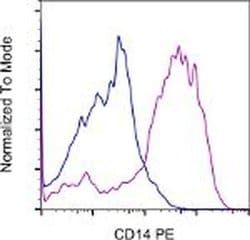
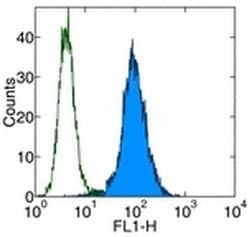
- CD14 is a 55 kDa GPI-anchored glycoprotein that is constitutively expressed on the surface of mature monocytes, macrophages, and neutrophils
- CD14 also serves as a multifunctional lipopolysaccharide receptor, and is released to the serum both as a secreted and enzymatically cleaved GPI-anchored form
- CD14 binds lipopolysaccharide molecule in a reaction catalyzed by lipopolysaccharide-binding protein (LBP), an acute phase serum protein
- The soluble sCD14 can discriminate slight structural differences between lipopolysaccharides and is important for neutralization of serum allochthonous lipopolysaccharides by reconstituted lipoprotein particles
- Further, CD14 has been shown to bind apoptotic cells, and can affect allergic, inflammatory and infectious processes
- Alternative splicing results in multiple transcript variants encoding the same CD14 isoform
- Diseases associated with CD14 dysfunction include mycobacterium chelonae infection and Croup.