BDB610381
Adaptin β Mouse, Unlabeled, Clone: 74, BD
Manufacturer: Fischer Scientific
The price for this product is unavailable. Please request a quote
Antigen
Adaptin β
Classification
Monoclonal
Concentration
250μg/mL
Formulation
Aqueous buffered solution containing BSA, glycerol, and ≤0.09% sodium azide.
Immunogen
Human Adaptin β aa. 75-245
Quantity
50 μg
Research Discipline
Cell Biology
Target Species
Canine, Chicken, Frog, Human, Mouse, Rat
Isotype
IgG1
Applications
Western Blot
Clone
74
Conjugate
Unconjugated
Host Species
Mouse
Purification Method
Affinity Purified
Regulatory Status
RUO
Primary or Secondary
Primary
Content And Storage
Store undiluted at -20°C.
Related Products



Description
- Sorting of integral membrane proteins at various stages of the endocytic and secretory pathways is mediated by vesicular trafficking between a variety of organelles
- Two sorting signals are tyrosine-based and dileucine-based signals that interact with heterotetrameric adaptor protein complexes (AP-1, AP-2, AP-3, and AP-4), which are associated with the vesicle coats
- These coatomers contain two large Adaptin proteins (γ, α,δ or ε and β1, β2, β3, or β4, respectively) that are noncovalently linked to one medium chain (μ1, μ2, μ3, or μ4) and one small chain (σ1, σ2, σ3, or σ4)
- The AP-1 and AP-3 complexes are involved in protein sorting from the TGN and endosomes, while AP-2 adaptor complexes are involved in clathrin-mediated endocytosis
- β Adaptin subunits (β1, β2, β3, β4) lack sequence homology to adaptins α, γ, δ and ε, but all of these subunits share a similar domain structure
- Adaptin β1 (also known as Adaptin β′) and β2 (also known as Adaptin β) have 83% amino acid identity and are found in the AP1 and AP2 complexes, respectively
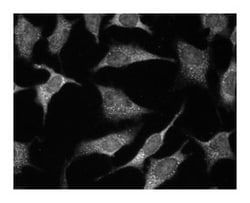
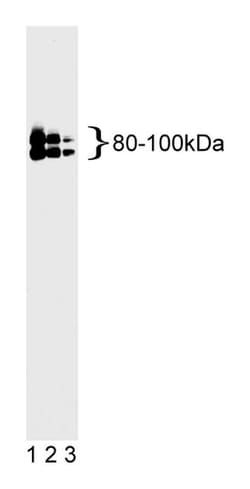
- Immunofluorescence, Immunohistochemistry, Immunoprecipitation, Western Blotting