BDB610843
Smad2/3 Mouse, Unlabeled, Clone: 18, BD
Manufacturer: Fischer Scientific
Select a Size
| Pack Size | SKU | Availability | Price |
|---|---|---|---|
| Each of 1 | BDB610843-Each-of-1 | In Stock | ₹ 50,596.50 |
BDB610843 - Each of 1
In Stock
Quantity
1
Base Price: ₹ 50,596.50
GST (18%): ₹ 9,107.37
Total Price: ₹ 59,703.87
Antigen
Smad2/3
Classification
Monoclonal
Concentration
250μg/mL
Formulation
Aqueous buffered solution containing BSA, glycerol, and ≤0.09% sodium azide.
Immunogen
Mouse Smad2 aa. 142-263
Quantity
150 μg
Research Discipline
Cell Biology
Target Species
Canine, Human, Mouse, Rat
Isotype
IgG1 κ
Applications
Western Blot
Clone
18
Conjugate
Unconjugated
Host Species
Mouse
Purification Method
Affinity Purified
Regulatory Status
RUO
Primary or Secondary
Primary
Content And Storage
Store undiluted at -20°C.
Related Products


Description
- The transforming growth factor β (TGFβ)/activin/BMP family of growth factors plays a diverse and important role in growth, development, and differentiation
- These growth factors act through their binding to heteromeric plasma membrane receptor protein kinases which, upon ligand binding, become activated and trigger an intracellular signaling cascade
- Specifically, receptor activation induces the translocation of a set of conserved proteins named Smads (Sma- and Mad-related proteins) to the nucleus, resulting in gene activation
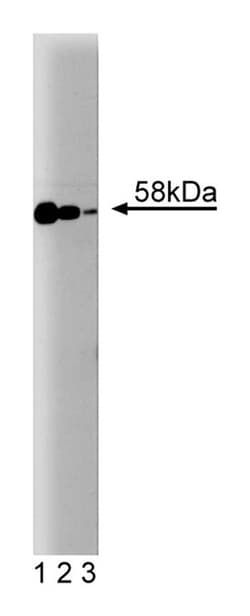
- Smad2 is a ubiquitously expressed protein of 58kDa that is phosphorylated and translocated to the nucleus in response to TGFβ, but not BMP
- The overall response to TGFβ is growth inhibition
- The Smad2 gene is located in chromosome 18q21.1 which is often absent in several human cancers
- Furthermore, some missense mutations on the Smad2 gene were identified in colorectal carcinomas, suggesting Smad2 may function as a tumor suppressor in normal cells
- Immunofluorescence, Immunoprecipitation, Western Blotting