SIRT5 Recombinant Rabbit Monoclonal Antibody (9H12), Invitrogen™
Manufacturer: Thermo Scientific
Select a Size
| Pack Size | SKU | Availability | Price |
|---|---|---|---|
| Each of 1 | FEMA549823-Each-of-1 | In Stock | ₹ 37,202.00 |
FEMA549823 - Each of 1
In Stock
Quantity
1
Base Price: ₹ 37,202.00
GST (18%): ₹ 6,696.36
Total Price: ₹ 43,898.36
Antigen
SIRT5
Classification
Recombinant Monoclonal
Concentration
1.5 mg/mL
Formulation
PBS with 50% glycerol and 0.02% sodium azide, pH 7.4
Gene Accession No.
Q9NXA8
Gene Symbols
SIRT5
Immunogen
A synthesized peptide derived from human SIRT5
Quantity
100 μL
Primary or Secondary
Primary
Target Species
Human
Form
Liquid
Applications
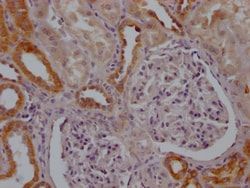
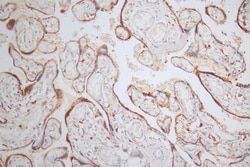
ELISA, Immunohistochemistry (Paraffin)
Clone
9H12
Conjugate
Unconjugated
Gene
SIRT5
Gene Alias
0610012J09Rik, 1500032M05Rik, AV001953, FLJ36950, HAMAP-Rule:MF_03160}, hypothetical protein LOC507347, NAD-dependent deacetylase sirtuin-5, NAD-dependent deacetylase sirtuin-5-like protein, NAD-dependent lysine demalonylase and desuccinylase sirtuin-5, mitochondrial, NAD-dependent protein deacylase sirtuin-5, mitochondrial, NAD-dependent protein deacylase sirtuin-5, mitochondrial {ECO:0000255, Regulatory protein SIR2 homolog 5, regulatory protein SIR2 homolog 5 {ECO:0000255, si:ch211-121a2.1, silent mating type information regulation 2, S.cerevisiae, homolog 5, Sir2l5, sir2-like 5, SIR2-like protein 5, SIR2-like protein 5 {ECO:0000255, Sirt5, sirtuin, sirtuin 5, sirtuin type 5, zgc:92288
Host Species
Rabbit
Purification Method
Affinity chromatography
Regulatory Status
RUO
Gene ID (Entrez)
23408
Content And Storage
-20°C or -80°C if preferred
Isotype
IgG
Related Products

Description
- SIRT5 is a human member of a family of proteins called Sirtuins (Sir2-like proteins) and are present in prokaryotes and eukaryotes
- All Sir2-like proteins have a sirtuin core domain, which contains a series of sequence motifs conserved in organisms ranging from bacteria to humans
- Bacterial, yeast and mammalian sirtuins are able to metabolize NAD and possibly at as mono-ADP-ribosyltransferases
- The enzymatic function of sirtuins is not yet completely understood but recent reports of histone-activated Sir2-mediated NAD metabolism and NAD-activated Sir2-mediated histone deacetylation suggest a possible coupled reciprocal activation mechanism involving interactions of Sir2 with NAD and the N epsilon-acetyl-lysine groups of acetylated histones.