GPX4 Recombinant Rabbit Monoclonal Antibody (9D4), Invitrogen™
Manufacturer: Thermo Scientific
Select a Size
| Pack Size | SKU | Availability | Price |
|---|---|---|---|
| Each of 1 | FEMA549854-Each-of-1 | In Stock | ₹ 37,202.00 |
FEMA549854 - Each of 1
In Stock
Quantity
1
Base Price: ₹ 37,202.00
GST (18%): ₹ 6,696.36
Total Price: ₹ 43,898.36
Antigen
GPX4
Classification
Recombinant Monoclonal
Concentration
0.6 mg/mL
Formulation
PBS with 50% glycerol and 0.02% sodium azide, pH 7.4
Gene Accession No.
P36969
Gene Symbols
GPX4
Immunogen
A synthesized peptide derived from human GPX4
Quantity
100 μL
Primary or Secondary
Primary
Target Species
Human
Form
Liquid
Applications
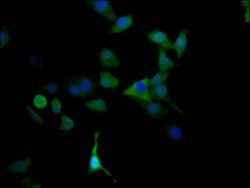
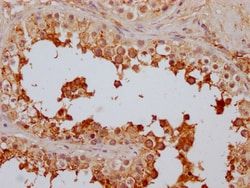
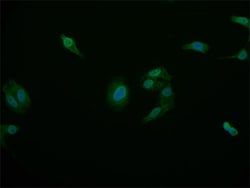
ELISA, Immunohistochemistry (Paraffin)
Clone
9D4
Conjugate
Unconjugated
Gene
GPX4
Gene Alias
glutathione peroxidase 4, GP-GPx4, Gpx4, gpx-4, GSHPx-4, HGNC:4556, MCSP, mtPHGPx, Phgpx, phospholipid hydroperoxidase, phospholipid hydroperoxide glutathione peroxidase, phospholipid hydroperoxide glutathione peroxidase, mitochondrial, phospholipid hydroperoxide glutathione peroxidase, nuclear, SMDS, snGPx, snPHGPx, sperm nuclei glutathione peroxidase, sperm nucleus glutathione peroxidase
Host Species
Rabbit
Purification Method
Affinity chromatography
Regulatory Status
RUO
Gene ID (Entrez)
2879
Content And Storage
-20°C or -80°C if preferred
Isotype
IgG
Related Products
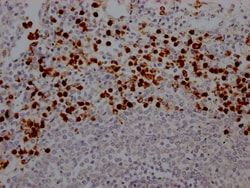
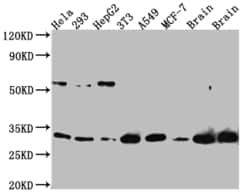
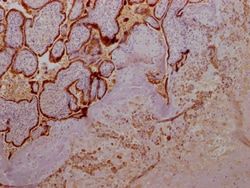
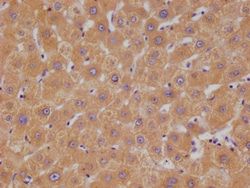

Description
- Glutathione peroxidase catalyzes the reduction of hydrogen peroxide, organic hydroperoxide, and lipid peroxides by reduced glutathione and functions in the protection of cells against oxidative damage
- Human plasma glutathione peroxidase has been shown to be a selenium-containing enzyme and the UGA codon is translated into a selenocysteine
- Through alternative splicing and transcription initiation, rat produces proteins that localize to the nucleus, mitochondrion, and cytoplasm
- In humans, experimental evidence for alternative splicing exists; alternative transcription initiation and the cleavage sites of the mitochondrial and nuclear transit peptides need to be experimentally verified.