FEMA549842
Growth Hormone Recombinant Rabbit Monoclonal Antibody (5E9), Invitrogen™
Manufacturer: Thermo Scientific
Select a Size
| Pack Size | SKU | Availability | Price |
|---|---|---|---|
| Each of 1 | FEMA549842-Each-of-1 | In Stock | ₹ 37,202.00 |
FEMA549842 - Each of 1
In Stock
Quantity
1
Base Price: ₹ 37,202.00
GST (18%): ₹ 6,696.36
Total Price: ₹ 43,898.36
Antigen
Growth Hormone
Classification
Recombinant Monoclonal
Concentration
1.25 mg/mL
Formulation
PBS with 50% glycerol and 0.02% sodium azide, pH 7.4
Gene Accession No.
P01241
Gene Symbols
Gh1
Immunogen
A synthesized peptide derived from human Growth Hormone
Quantity
100 μL
Primary or Secondary
Primary
Target Species
Human
Form
Liquid
Applications
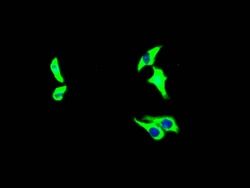
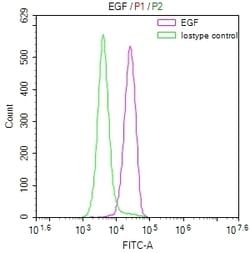
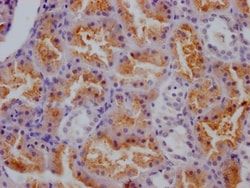
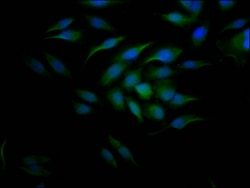
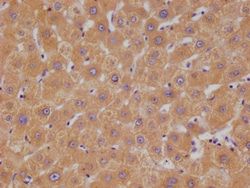
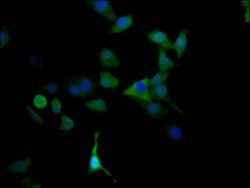
ELISA, Immunohistochemistry (Paraffin)
Clone
5E9
Conjugate
Unconjugated
Gene
Gh1
Gene Alias
dog growth hormone, GH, Gh1, GHB1, GHB5, GHN, GH-N, Growth hormone, growth hormone 1, growth hormone 12, growth hormone B1, growth hormone B5, growth hormone precursor, HGH, hGH-N, IGHD1B, pituitary growth hormone, RNGHGP, Somatotropin
Host Species
Rabbit
Purification Method
Affinity chromatography
Regulatory Status
RUO
Gene ID (Entrez)
2688
Content And Storage
-20°C or -80°C if preferred
Isotype
IgG
Related Products


Description
- Human growth hormone (hGH) is a member of the somatotropin/prolactin family of hormones which play an important role in growth control
- The GH1 gene, along with 4 additional related genes, is located at the growth hormone locus on chromosome 17
- The five genes share a remarkably high degree of sequence identity
- Alternative splicing results in 5 isoforms ranging from approximately 19 kDa to 24 kDa
- HGH is produced by the somatotroph cells in the pituitary
- It acts through binding to membrane receptors that belong to the cytokine receptor subfamily
- Its major role in stimulating body growth is to stimulate the liver and other tissues to secrete IGF-1
- It stimulates both the differentiation and proliferation of myoblasts
- It also stimulates amino acid uptake and protein synthesis in muscle and other tissues
- Mutations or deletions in the gene lead to growth hormone deficiency and short stature.