FEMA549887
Cullin 3 Recombinant Rabbit Monoclonal Antibody (7B6), Invitrogen™
Manufacturer: Thermo Scientific
Select a Size
| Pack Size | SKU | Availability | Price |
|---|---|---|---|
| Each of 1 | FEMA549887-Each-of-1 | In Stock | ₹ 37,202.00 |
FEMA549887 - Each of 1
In Stock
Quantity
1
Base Price: ₹ 37,202.00
GST (18%): ₹ 6,696.36
Total Price: ₹ 43,898.36
Antigen
Cullin 3
Classification
Recombinant Monoclonal
Concentration
0.35 mg/mL
Formulation
PBS with 50% glycerol and 0.02% sodium azide, pH 7.4
Gene Accession No.
Q13618
Gene Symbols
CUL3
Immunogen
A synthesized peptide derived from human Cullin 3
Quantity
100 μL
Primary or Secondary
Primary
Target Species
Human
Form
Liquid
Applications
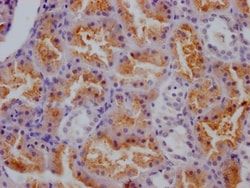
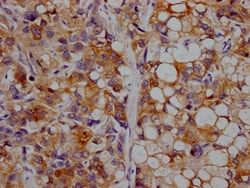
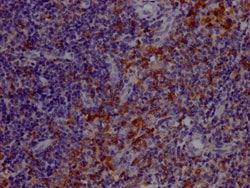
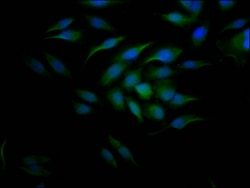
ELISA, Immunohistochemistry (Paraffin)
Clone
7B6
Conjugate
Unconjugated
Gene
CUL3
Gene Alias
AI467304, AW146203, Cul3, CUL-3, cullin 3, cullin-3, KIAA0617, mKIAA0617, OTTHUMP00000203839, OTTHUMP00000203840, PHA2E
Host Species
Rabbit
Purification Method
Affinity chromatography
Regulatory Status
RUO
Gene ID (Entrez)
8452
Content And Storage
-20°C or -80°C if preferred
Isotype
IgG
Related Products

Description
- Cullin 3 is a member of the family of human cullin genes (CUL 1, 2, 3, 4a, 4b, and 5) homologous to the S
- cerevisiae cdc 53 gene
- CUL 1 forms a complex with human p19 skp1 and F box protein p45 skp2
- Together with cdc 53 (Known as Cul A), as three subunits, they form a ubiquitin ligase-controlling proteolysis of G1 cell cycle regulatory proteins
- In contrast to CUL 1, CUL 2 does not associate with p19 skp1 and p45 skp2
- Instead, CUL 2 forms a complex with an inactive transcriptional elongation complex, SIII, formed by three subunits: Elongain C, Elongin B and VHL
- The function of this association remains unknown.