FEMA549932
Cyclin E Recombinant Rabbit Monoclonal Antibody (9H12), Invitrogen™
Manufacturer: Thermo Scientific
Select a Size
| Pack Size | SKU | Availability | Price |
|---|---|---|---|
| Each of 1 | FEMA549932-Each-of-1 | In Stock | ₹ 37,202.00 |
FEMA549932 - Each of 1
In Stock
Quantity
1
Base Price: ₹ 37,202.00
GST (18%): ₹ 6,696.36
Total Price: ₹ 43,898.36
Antigen
Cyclin E
Classification
Recombinant Monoclonal
Concentration
1.3 mg/mL
Formulation
PBS with 50% glycerol and 0.02% sodium azide, pH 7.4
Gene Accession No.
P24864
Gene Symbols
CCNE1
Immunogen
A synthesized peptide derived from human Cyclin E1
Quantity
100 μL
Primary or Secondary
Primary
Target Species
Human
Form
Liquid
Applications
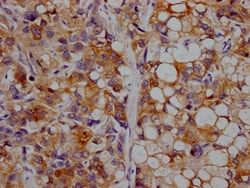
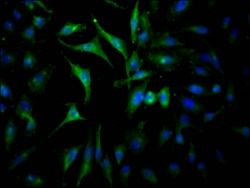
ELISA, Immunocytochemistry
Clone
9H12
Conjugate
Unconjugated
Gene
CCNE1
Gene Alias
AW538188, Ccne, Ccne1, CycE1, CYCLE, cyclin E, cyclin E1, cyclin Es, cyclin Et, E-S, G1/S-specific cyclin-E1, pCCNE1
Host Species
Rabbit
Purification Method
Affinity chromatography
Regulatory Status
RUO
Gene ID (Entrez)
898
Content And Storage
-20°C or -80°C if preferred
Isotype
IgG
Related Products


Description
- Cyclin E belongs to the highly conserved cyclin family, whose members are characterized by a dramatic periodicity in protein abundance through the cell cycle
- Cyclins function as regulators of CDK kinases
- Different cyclins exhibit distinct expression and degradation patterns which contribute to the temporal coordination of each mitotic event
- Cyclin E forms a complex with and functions as a regulatory subunit of CDK2, whose activity is required for cell cycle G1/S transition
- This protein accumulates at the G1-S phase boundary and is degraded as cells progress through S phase
- Overexpression of this gene has been observed in many tumors, which results in chromosome instability, and thus may contribute to tumorigenesis
- This protein was found to associate with, and be involved in, the phosphorylation of NPAT protein (nuclear protein mapped to the ATM locus), which participates in cell-cycle regulated histone gene expression and plays a critical role in promoting cell-cycle progression in the absence of pRB
- Two alternatively spliced transcript variants of this gene, which encode distinct isoforms, have been described
- Two additional splice variants were reported but detailed nucleotide sequence information is not yet available.