Arginase 2 Recombinant Rabbit Monoclonal Antibody (9A4), Invitrogen™
Manufacturer: Thermo Scientific
Select a Size
| Pack Size | SKU | Availability | Price |
|---|---|---|---|
| Each of 1 | FEMA550032-Each-of-1 | In Stock | ₹ 37,202.00 |
FEMA550032 - Each of 1
In Stock
Quantity
1
Base Price: ₹ 37,202.00
GST (18%): ₹ 6,696.36
Total Price: ₹ 43,898.36
Antigen
Arginase 2
Classification
Recombinant Monoclonal
Concentration
0.6 mg/mL
Formulation
PBS with 50% glycerol and 0.02% sodium azide, pH 7.4
Gene Accession No.
P78540
Gene Symbols
ARG2
Immunogen
A synthesized peptide derived from human ARG2
Quantity
100 μL
Primary or Secondary
Primary
Target Species
Human
Form
Liquid
Applications
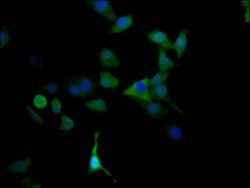
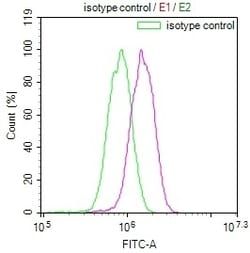
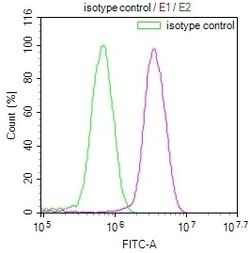
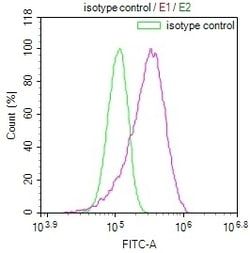
ELISA, Flow Cytometry, Immunocytochemistry, Immunohistochemistry (Paraffin)
Clone
9A4
Conjugate
Unconjugated
Gene
ARG2
Gene Alias
AII, AII type II arginase, ARG2, arginase 2, arginase II, arginase type II, arginase, type II, arginase-2, mitochondrial, AU022422, kidney arginase, kidney-type arginase, L-arginine amidinohydrolase, L-arginine ureahydrolase, nonhepatic arginase, non-hepatic arginase, type II arginase
Host Species
Rabbit
Purification Method
Affinity chromatography
Regulatory Status
RUO
Gene ID (Entrez)
384
Content And Storage
-20°C or -80°C if preferred
Isotype
IgG
Related Products




Description
- Arginase catalyzes the hydrolysis of arginine to ornithine and urea
- At least two isoforms of mammalian arginase exists (types I and II) which differ in their tissue distribution, subcellular localization, immunologic crossreactivity and physiologic function
- The type II isoform encoded by this gene, is located in the mitochondria and expressed in extra-hepatic tissues, especially kidney
- The physiologic role of this isoform is poorly understood; it is thought to play a role in nitric oxide and polyamine metabolism
- Transcript variants of the type II gene resulting from the use of alternative polyadenylation sites have been described.