FEMA550251
Cathepsin L Recombinant Mouse Monoclonal Antibody (12H6), Invitrogen™
Manufacturer: Thermo Scientific
Select a Size
| Pack Size | SKU | Availability | Price |
|---|---|---|---|
| Each of 1 | FEMA550251-Each-of-1 | In Stock | ₹ 37,202.00 |
FEMA550251 - Each of 1
In Stock
Quantity
1
Base Price: ₹ 37,202.00
GST (18%): ₹ 6,696.36
Total Price: ₹ 43,898.36
Antigen
Cathepsin L
Classification
Recombinant Monoclonal
Concentration
0.17 mg/mL
Formulation
PBS with 50% glycerol and 0.03% Proclin 300, pH 7.4
Gene Accession No.
P07711
Gene Symbols
CTSL
Immunogen
Recombinant Human CTSL protein
Quantity
100 μL
Primary or Secondary
Primary
Target Species
Human
Form
Liquid
Applications
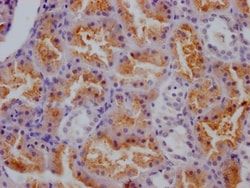
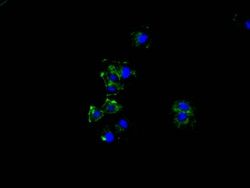
ELISA, Immunocytochemistry, Immunohistochemistry (Paraffin)
Clone
12H6
Conjugate
Unconjugated
Gene
CTSL
Gene Alias
1190035F06Rik, Cat L, cathepsin L, Cathepsin L1, Cathepsin L1 heavy chain, Cathepsin L1 light chain, CATHL, CatL, CP-2, Ctsl, CTSL1, cyclic protein 2, fs, furless, major excreted protein, MEP, nackt, nkt, p39 cysteine proteinase, Procathepsin L
Host Species
Mouse
Purification Method
Affinity chromatography
Regulatory Status
RUO
Gene ID (Entrez)
1514
Content And Storage
-20°C or -80°C if preferred
Isotype
IgG
Related Products


Description
- The protein encoded by this gene is a lysosomal cysteine proteinase that plays a major role in intracellular protein catabolism
- Its substrates include collagen and elastin, as well as alpha-1 protease inhibitor, a major controlling element of neutrophil elastase activity
- The encoded protein has been implicated in several pathologic processes, including myofibril necrosis in myopathies and in myocardial ischemia, and in the renal tubular response to proteinuria
- This protein, which is a member of the peptidase C1 family, is a dimer composed of disulfide-linked heavy and light chains, both produced from a single protein precursor
- At least two transcript variants encoding the same protein have been found for this gene.