FEMA550259
Ubiquitin C Recombinant Mouse Monoclonal Antibody (6G8), Invitrogen™
Manufacturer: Thermo Scientific
Select a Size
| Pack Size | SKU | Availability | Price |
|---|---|---|---|
| Each of 1 | FEMA550259-Each-of-1 | In Stock | ₹ 37,202.00 |
FEMA550259 - Each of 1
In Stock
Quantity
1
Base Price: ₹ 37,202.00
GST (18%): ₹ 6,696.36
Total Price: ₹ 43,898.36
Antigen
Ubiquitin C
Classification
Recombinant Monoclonal
Concentration
0.27 mg/mL
Formulation
PBS with 50% glycerol and 0.03% Proclin 300, pH 7.4
Gene Accession No.
P0CG48
Gene Symbols
UBC
Immunogen
Recombinant Human UBC protein
Quantity
100 μL
Primary or Secondary
Primary
Target Species
Human
Form
Liquid
Applications
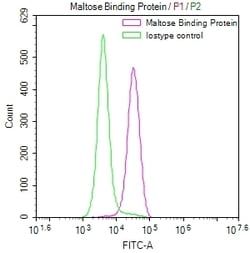
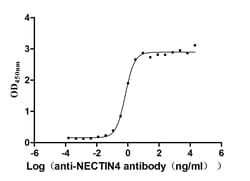
ELISA, Flow Cytometry
Clone
6G8
Conjugate
Unconjugated
Gene
UBC
Gene Alias
2700054O04Rik, AI194771, HMG20, polyubiquitin C, polyubiquitin-C, Rps27a, TI-225, Uba52, Ubb, Ubc, Ubiquitin, ubiquitin C, Ubiquitin-related, Ubiquitin-related 1, Ubiquitin-related 2
Host Species
Mouse
Purification Method
Affinity chromatography
Regulatory Status
RUO
Gene ID (Entrez)
7316
Content And Storage
-20°C or -80°C if preferred
Isotype
IgG
Related Products

Description
- This gene encodes ubiquitin, one of the most conserved proteins known
- Ubiquitin is required for ATP-dependent, nonlysosomal intracellular protein degradation of abnormal proteins and normal proteins with a rapid turnover
- Ubiquitin is covalently bound to proteins to be degraded, and presumably labels these proteins for degradation
- Ubiquitin also binds to histone H2A in actively transcribed regions but does not cause histone H2A degradation, suggesting that ubiquitin is also involved in regulation of gene expression
- This gene consists of three direct repeats of the ubiquitin coding sequence with no spacer sequence
- Consequently, the protein is expressed as a polyubiquitin precursor with a final amino acid after the last repeat
- Aberrant form of this protein has been noticed in patients with Alzheimer's and Down syndrome.