p53 Recombinant Rabbit Monoclonal Antibody (PD01-32), Invitrogen™
Manufacturer: Thermo Scientific
Select a Size
| Pack Size | SKU | Availability | Price |
|---|---|---|---|
| Each of 1 | FEMA550738-Each-of-1 | In Stock | ₹ 42,275.00 |
FEMA550738 - Each of 1
In Stock
Quantity
1
Base Price: ₹ 42,275.00
GST (18%): ₹ 7,609.50
Total Price: ₹ 49,884.50
Antigen
p53
Classification
Recombinant Monoclonal
Concentration
1 mg/mL
Formulation
PBS with 0.1% BSA, 40% glycerol and 0.05% sodium azide; pH 7.4
Gene Accession No.
P04637
Gene Symbols
Tp53
Immunogen
Recombinant full length protein within Human p53 aa 1-393/393.
Quantity
100 μL
Primary or Secondary
Primary
Target Species
Human
Form
Liquid
Applications
Immunohistochemistry (Paraffin)
Clone
PD01-32
Conjugate
Unconjugated
Gene
Tp53
Gene Alias
Antigen NY-CO-13, bbl, BCC7, bfy, bhy, cellular tumor antigen p53, Cys 51 Stop, EGK_08142, FLJ92943, HGNC11998, I79_002739, LFS1, Li-Fraumeni syndrome, mutant p53, mutant tumor protein 53, OTTMUSP00000006194, p44, p53, p53 cellular tumor antigen, p53 protein, p53 tumor suppressor, p53 tumor suppressor phosphoprotein, phosphoprotein p53, Tp53, tp53.L, transformation related protein 53, transformation-related protein 53, Trp248, Trp53, tumor protein 53, tumor protein p53, tumor protein p53 (Li-Fraumeni syndrome), tumor protein p53 L homeolog, tumor suppressor p53, tumor suppressor p53 phosphoprotein, tumor suppressor protein p53, tumor supressor p53, Tumour Protein p53, XELAEV_180196761mg, Xp53, Xrel3
Host Species
Rabbit
Purification Method
Protein A
Regulatory Status
RUO
Gene ID (Entrez)
7157
Content And Storage
Store at 4°C short term. For long term storage, store at -20°C, avoiding freeze/thaw cycles.
Isotype
IgG
Related Products



Description
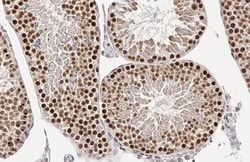
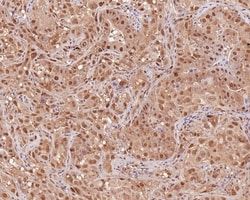
- Positive control: Human stomach cancer tissue, human breast cancer tissue
- Predicted band size: 53 kDa Subcellular Location: Cytoplasm, Nucleus, Endoplasmic reticulum, Mitochondrion matrix
- The tumor suppressor protein, p53, is a sequence specific transcription factor that is activated by cellular stress
- p53 mediates cell cycle arrest or apoptosis in response to DNA damage or starvation for pyrimidine nucleotides
- p53 is up-regulated in response to stress signals and stimulated to activate transcription of specific genes, resulting in expression of p21waf1 and other proteins involved in G1 or G2/M arrest
- The structure of p53 comprises an N-terminal transactivation domain, a central DNA-binding domain, an oligomerisation domain, and a C-terminal regulatory domain
- There are various phosphorylation sites on p53, of which the phosphorylation at Ser15 is important for p53 activation and stabilization
- p53 has been characterized to play a role in blocking the proliferative action of damaged cells and act as an anticancer agent
- Phosphorylation of Ser392 in p53 has been shown to associate with the formation of human tumors
- In addition, p53 has also been linked to the effects of aging and oxidative stress and an increase in p53 has been linked to deficits in LTP (Long Term Potentiation) in learning and memory
- p53 is found in very low levels in normal cells, however, in a variety of transformed cell lines, it is expressed in high amounts, and believed to contribute to transformation and malignancy
- Mutants of p53 that frequently occur in a number of different human cancers fail to bind the consensus DNA binding site, and cause the loss of tumor suppressor activity
- Alterations of the TP53 gene occur not only as somatic mutations in human malignancies, but also as germline mutations in some cancer-prone families such as Li-Fraumeni syndrome.