FEPA5144672
Cathepsin K Polyclonal Antibody, Invitrogen™
Manufacturer: Thermo Scientific
Select a Size
| Pack Size | SKU | Availability | Price |
|---|---|---|---|
| Each of 1 | FEPA5144672-Each-of-1 | In Stock | ₹ 40,851.00 |
FEPA5144672 - Each of 1
In Stock
Quantity
1
Base Price: ₹ 40,851.00
GST (18%): ₹ 7,353.18
Total Price: ₹ 48,204.18
Antigen
Cathepsin K
Classification
Polyclonal
Conjugate
Unconjugated
Gene
CTSK
Gene Alias
AI323530, Cat K, cathepsin K, Cathepsin O, cathepsin O1, cathepsin O2, Cathepsin X, catK, CTS02, CTSK, CTSO, CTSO1, CTSO2, MGC23107, minisatellite 10q detected by probe MMS10, MMS10-Q, Ms10q, PKND, PYCD
Host Species
Rabbit
Purification Method
Protein A
Regulatory Status
RUO
Gene ID (Entrez)
1513
Content And Storage
Store at 4°C short term. For long term storage, store at -20°C, avoiding freeze/thaw cycles.
Isotype
IgG
Applications
Western Blot
Concentration
2 mg/mL
Formulation
PBS with 0.1% BSA, 40% glycerol and 0.05% sodium azide; pH 7.4
Gene Accession No.
P43235
Gene Symbols
CTSK
Immunogen
Synthetic peptide within Human Cathepsin K aa 101-250/329.
Quantity
100 μL
Primary or Secondary
Primary
Target Species
Human
Form
Liquid
Related Products


Description
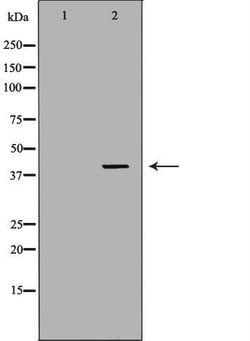
- Positive control: Jurkat cell lysate, K562 cell lysate, A549 cell lysate, U87MG cell lysate, A431 cell lysate
- Predicted band size: 37 kDa Subcellular Location: Lysosome, Secreted, Apical cell membrane
- The protein encoded by this gene is a lysosomal cysteine proteinase involved in bone remodeling and resorption
- This protein, which is a member of the peptidase C1 protein family, is predominantly expressed in osteoclasts
- However, the encoded protein is also expressed in a significant fraction of human breast cancers, where it could contribute to tumor invasiveness
- Mutations in this gene are the cause of pycnodysostosis, an autosomal recessive disease characterized by osteosclerosis and short stature
- This gene may be subject to RNA editing.