Cathepsin K Polyclonal Antibody, Invitrogen™
Manufacturer: Thermo Scientific
Select a Size
| Pack Size | SKU | Availability | Price |
|---|---|---|---|
| Each of 1 | PIPA5102483-Each-of-1 | In Stock | ₹ 45,345.50 |
PIPA5102483 - Each of 1
In Stock
Quantity
1
Base Price: ₹ 45,345.50
GST (18%): ₹ 8,162.19
Total Price: ₹ 53,507.69
Antigen
Cathepsin K
Classification
Polyclonal
Conjugate
Unconjugated
Gene
CTSK
Gene Alias
AI323530; Cat K; cathepsin K; Cathepsin O; cathepsin O1; cathepsin O2; Cathepsin X; catK; CTS02; CTSK; CTSO; CTSO1; CTSO2; MGC23107; minisatellite 10q detected by probe MMS10; MMS10-Q; Ms10q; PKND; PYCD
Host Species
Rabbit
Purification Method
Affinity chromatography
Regulatory Status
RUO
Gene ID (Entrez)
13038, 1513, 29175
Content And Storage
-20°C
Form
Liquid
Applications
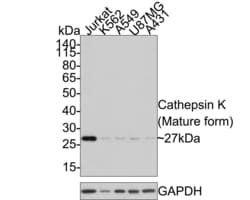
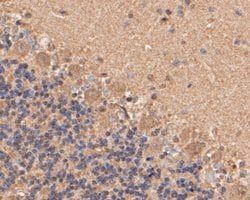
Immunocytochemistry, Immunohistochemistry (Paraffin), Western Blot
Concentration
1 mg/mL
Formulation
PBS with 50% glycerol and 0.02% sodium azide; pH 7.4
Gene Accession No.
O35186, P43235, P55097
Gene Symbols
CTSK
Immunogen
A synthesized peptide derived from human CTSK(Accession P43235), corresponding to amino acid residues V11-N61.
Quantity
100 μL
Primary or Secondary
Primary
Target Species
Human, Mouse, Rat
Product Type
Antibody
Isotype
IgG
Related Products




Description
- Antibody detects endogenous levels of total CTSK
- The protein encoded by this gene is a lysosomal cysteine proteinase involved in bone remodeling and resorption
- This protein, which is a member of the peptidase C1 protein family, is predominantly expressed in osteoclasts
- However, the encoded protein is also expressed in a significant fraction of human breast cancers, where it could contribute to tumor invasiveness
- Mutations in this gene are the cause of pycnodysostosis, an autosomal recessive disease characterized by osteosclerosis and short stature
- This gene may be subject to RNA editing.