MA123056
Epo Monoclonal Antibody (Epo2), Invitrogen™
Manufacturer: Thermo Scientific
Select a Size
| Pack Size | SKU | Availability | Price |
|---|---|---|---|
| Each of 1 | MA123056-Each-of-1 | In Stock | ₹ 49,884.50 |
MA123056 - Each of 1
In Stock
Quantity
1
Base Price: ₹ 49,884.50
GST (18%): ₹ 8,979.21
Total Price: ₹ 58,863.71
Antigen
Epo
Classification
Monoclonal
Concentration
3.7 mg/mL
Formulation
PBS with 0.09% sodium azide; pH 7.4
Gene Accession No.
P01588
Gene Symbols
EPO
Immunogen
Recombinant full length protein (Human).
Quantity
500 μg
Primary or Secondary
Primary
Target Species
Human
Product Type
Antibody
Isotype
IgG1
Applications
ELISA
Clone
Epo2
Conjugate
Unconjugated
Gene
EPO
Gene Alias
EP; EPO; Epoetin; erythropoietin; MGC138142; MVCD2
Host Species
Mouse
Purification Method
Protein G
Regulatory Status
RUO
Gene ID (Entrez)
2056
Content And Storage
4° C, do not freeze
Form
Liquid
Related Products




Description
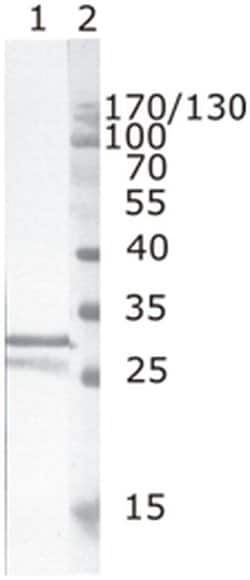
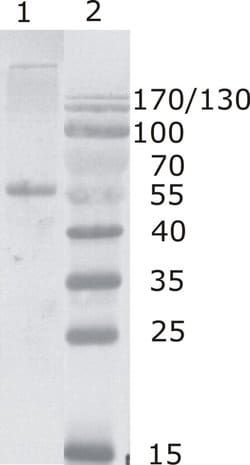
- The predicted molecular weight for this product is 21 kDa
- Erythropoietin (EPO) protein is a growth factor essential for the survival, proliferation, and differentiation of erythroid precursors
- EPO is not responsible for early commitment to the lineage, and instead induces the final maturation of partially differentiated erythroid cells and the production of red cell-specific proteins, such as hemoglobin
- The EPO receptor (EPOR) is present in higher levels on precursor cells, and expression diminishes with cell maturation.Hepatocytes are the main source of EPO in the fetus, followed by interstitial cells of the kidney after birth and through adulthood
- EPO expression is upregulated during hypoxia, and low levels of transcription have also been detected in lung and brain tissue under these conditions
- Recent data suggest that EPO may also play a role in the protection of neuronal tissue from damage and initiation of repair.