MA17366
Hepatitis C Virus Core Antigen Monoclonal Antibody (D95B), Invitrogen™
Manufacturer: Thermo Scientific
Select a Size
| Pack Size | SKU | Availability | Price |
|---|---|---|---|
| Each of 1 | MA17366-Each-of-1 | In Stock | ₹ 50,507.50 |
MA17366 - Each of 1
In Stock
Quantity
1
Base Price: ₹ 50,507.50
GST (18%): ₹ 9,091.35
Total Price: ₹ 59,598.85
Antigen
Hepatitis C Virus Core Antigen
Classification
Monoclonal
Concentration
0.1 mg/mL
Formulation
PBS with 0.1% sodium azide; pH 7.2
Host Species
Mouse
Purification Method
Protein A
Regulatory Status
RUO
Target Species
Virus
Product Type
Antibody
Isotype
IgG1
Applications
ELISA, Immunohistochemistry, Western Blot
Clone
D95B
Conjugate
Unconjugated
Gene Alias
HCV core; HCVgp1; HepC; HepC core; polyprotein
Immunogen
Viral core protein.
Quantity
100 μg
Primary or Secondary
Primary
Content And Storage
4° C
Form
Liquid
Related Products

Description
- The MA1-7366 antibody reacts with Hepatitis C virus (genotypes 1a,1b, and 2a) core capture/probe in viral and infected tissue samples
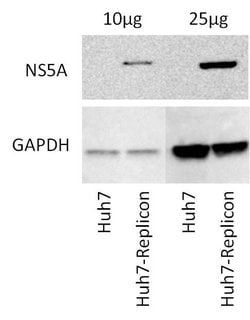
- MA1-7366 has been successfully used in ELISA, Immunofluorescence, Western blot and Immunohistochemical applications
- The MA1-7366 antibody was raised against the HCV Viral core protein
- The epitope of MA1-7366 has been mapped amino acids 33-38 of HCV
- HCV is a positive, single-stranded RNA virus in the Flaviviridae family
- The genome is approximately 10,000 nucleotides and encodes a single polyprotein of about 3,000 amino acids
- The polyprotein is processed by host cell and viral proteases into three major structural proteins and several non-structural protein necessary for viral replication
- Several different genotypes of HCV with slightly different genomic sequences have since been identified that correlate with differences in response to treatment with interferon alpha.