GPR85 Polyclonal Antibody, Invitrogen™
Manufacturer: Thermo Scientific
Select a Size
| Pack Size | SKU | Availability | Price |
|---|---|---|---|
| Each of 1 | PA124547-Each-of-1 | In Stock | ₹ 49,350.50 |
PA124547 - Each of 1
In Stock
Quantity
1
Base Price: ₹ 49,350.50
GST (18%): ₹ 8,883.09
Total Price: ₹ 58,233.59
Antigen
GPR85
Classification
Polyclonal
Conjugate
Unconjugated
Gene
GPR85
Gene Alias
2900026B03Rik; FLJ50993; FLJ51159; FLJ99433; G protein-coupled receptor 85; Gpr85; PKrCx1; probable G-protein coupled receptor 85; Rgpr85; seven transmembrane helix receptor; SREB; SREB2; Srep2; Super conserved receptor expressed in brain 2
Host Species
Rabbit
Purification Method
Antigen affinity chromatography
Regulatory Status
RUO
Gene ID (Entrez)
54329
Content And Storage
Store at 4°C short term. For long term storage, store at -20°C, avoiding freeze/thaw cycles.
Form
Liquid
Applications
Immunohistochemistry (Paraffin)
Concentration
1 mg/mL
Formulation
PBS with 0.1% sodium azide
Gene Accession No.
P60893
Gene Symbols
GPR85
Immunogen
Synthetic 20 amino acid peptide from 2nd extracellular domain of human GPR85
Quantity
25 μg
Primary or Secondary
Primary
Target Species
Human
Product Type
Antibody
Isotype
IgG
Related Products



Description
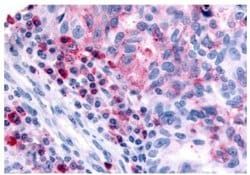
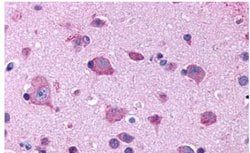
- Description PA1-24547 detects G Protein-Coupled Receptor GPR85/SREB2 in Human samples
- GPR85, a member of the SREB (Super-Conserved Receptor Expressed in Brain) family of GPCRs, is an Orphan-A GPCR with an unknown ligand
- The rat counterpart of SREB2 is involved in the development of the cerebral cortex
- GPR85 has been reported to be expressed in several areas of human and rat CNS (Matsumoto et al., 2000), as well as in genital organs
- ESTs have been isolated from B-cell/lung/testis, brain, testis, and embryo libraries, as well as many mouse tissue libraries.