Phospho-HDAC5/HDAC9 (Ser259, Ser220) Polyclonal Antibody, Invitrogen™
Manufacturer: Thermo Scientific
Select a Size
| Pack Size | SKU | Availability | Price |
|---|---|---|---|
| Each of 1 | PA540215-Each-of-1 | In Stock | ₹ 46,057.50 |
PA540215 - Each of 1
In Stock
Quantity
1
Base Price: ₹ 46,057.50
GST (18%): ₹ 8,290.35
Total Price: ₹ 54,347.85
Antigen
Phospho-HDAC5/HDAC9 (Ser259, Ser220)
Classification
Polyclonal
Conjugate
Unconjugated
Gene
HDAC5
Gene Alias
Antigen NY-CO-9; HD5; HD7; HD7b; HD9; HDAC; HDAC5; HDAC7; HDAC7B; HDAC9; hdac-9; HDAC9B; HDAC9FL; HDRP; histone deacetylase 4/5-related protein; histone deacetylase 5; Histone deacetylase 7B; histone deacetylase 9; Histone deacetylase-related protein; KIAA0600; KIAA0744; MEF-2 interacting transcription repressor (MITR) protein; MEF2-interacting transcription repressor MITR; MITR; NY-CO-9
Host Species
Rabbit
Purification Method
Antigen affinity chromatography
Regulatory Status
RUO
Gene ID (Entrez)
10014, 15184, 79221, 9734
Content And Storage
-20° C, Avoid Freeze/Thaw Cycles
Form
Liquid
Applications
ELISA, Immunohistochemistry, Western Blot
Concentration
1 mg/mL
Formulation
PBS with 0.5% BSA, 50% glycerol and 0.02% sodium azide; pH 7.4
Gene Accession No.
Q99N13, Q9UKV0, Q9UQL6, Q9Z2V6
Gene Symbols
HDAC5, HDAC9
Immunogen
Synthesized peptide derived from human HDAC5/9 around the phosphorylation site of S259/220.
Quantity
100 μL
Primary or Secondary
Primary
Target Species
Human, Mouse
Product Type
Antibody
Isotype
IgG
Related Products
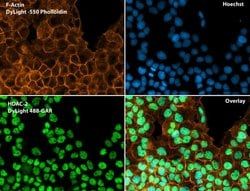
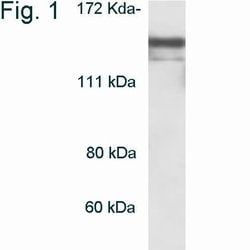

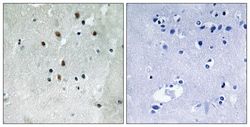
Description
- This antibody is predicted to react with mouse based on sequence homology
- Responsible for the deacetylation of lysine residues on the N-terminal part of the core histones (H2A, H2B, H3 and H4)
- Histone deacetylation gives a tag for epigenetic repression and plays an important role in transcriptional regulation, cell cycle progression and developmental events
- Histone deacetylases act via the formation of large multiprotein complexes
- Involved in muscle maturation by repressing transcription of myocyte enhancer MEF2C
- During muscle differentiation, it shuttles into the cytoplasm, allowing the expression of myocyte enhancer factors
- Involved in the MTA1-mediated epigenetic regulation of ESR1 expression in breast cancer.