PA549403
EHD2 Polyclonal Antibody, Invitrogen™
Manufacturer: Thermo Scientific
Select a Size
| Pack Size | SKU | Availability | Price |
|---|---|---|---|
| Each of 1 | PA549403-Each-of-1 | In Stock | ₹ 46,502.50 |
PA549403 - Each of 1
In Stock
Quantity
1
Base Price: ₹ 46,502.50
GST (18%): ₹ 8,370.45
Total Price: ₹ 54,872.95
Antigen
EHD2
Classification
Polyclonal
Conjugate
Unconjugated
Gene
Ehd2
Gene Alias
BC027084; C130052H20Rik; EH domain containing 2; EH domain-containing protein 2; Ehd2; EH-domain containing 2; FLJ96617; MGEPS; PAST homolog 2; PAST2; putative eps protein
Host Species
Rabbit
Purification Method
Antigen affinity chromatography, Protein A
Regulatory Status
RUO
Gene ID (Entrez)
259300, 30846, 361512
Content And Storage
-20° C, Avoid Freeze/Thaw Cycles
Form
Liquid
Applications
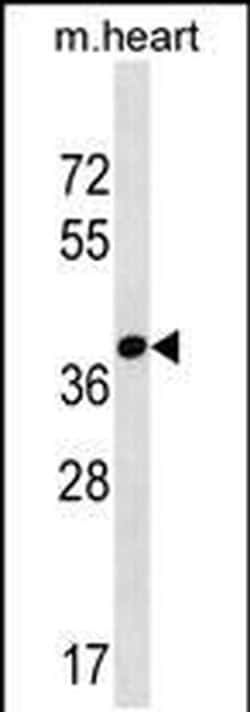
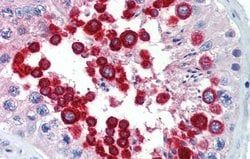
Immunohistochemistry (Paraffin), Western Blot
Concentration
0.3 mg/mL
Formulation
PBS with 0.09% sodium azide
Gene Accession No.
Q4V8H8, Q8BH64, Q9NZN4
Gene Symbols
Ehd2
Immunogen
KLH conjugated synthetic peptide between 415-449 amino acids from the C-terminal region of human EHD2.
Quantity
400 μL
Primary or Secondary
Primary
Target Species
Human, Mouse, Rat
Product Type
Antibody
Isotype
IgG
Related Products





Description
- Description This gene encodes a member of the EH domain-containing protein family
- These proteins are characterized by a C-terminal EF-hand domain, a nucleotide-binding consensus site at the N terminus and a bipartite nuclear localization signal
- The encoded protein interacts with the actin cytoskeleton through an N-terminal domain and also binds to an EH domain-binding protein through the C-terminal EH domain
- This interaction appears to connect clathrin-dependent endocytosis to actin, suggesting that this gene product participates in the endocytic pathway.