PA549892
CARKL Polyclonal Antibody, Invitrogen™
Manufacturer: Thermo Scientific
Select a Size
| Pack Size | SKU | Availability | Price |
|---|---|---|---|
| Each of 1 | PA549892-Each-of-1 | In Stock | ₹ 48,104.50 |
PA549892 - Each of 1
In Stock
Quantity
1
Base Price: ₹ 48,104.50
GST (18%): ₹ 8,658.81
Total Price: ₹ 56,763.31
Antigen
CARKL
Classification
Polyclonal
Conjugate
Unconjugated
Gene
SHPK
Gene Alias
4930431K22Rik; AI194947; AW260459; Carbohydrate kinase-like protein; CARKL; Sedoheptulokinase; SHK; Shpk
Host Species
Rabbit
Purification Method
Antigen affinity chromatography
Regulatory Status
RUO
Gene ID (Entrez)
23729, 287479, 74637
Content And Storage
-20°C
Form
Liquid
Applications
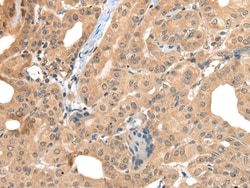
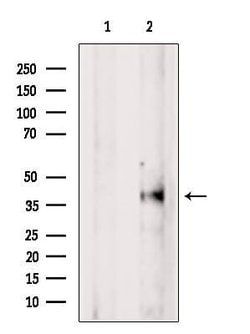
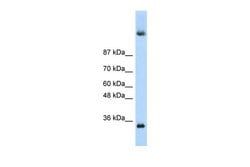
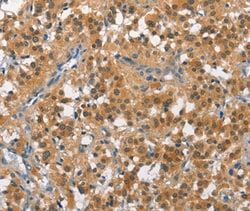
Immunohistochemistry (Paraffin), Western Blot
Concentration
1 mg/mL
Formulation
PBS with 50% glycerol and 0.02% sodium azide; pH 7.4
Gene Accession No.
Q9D5J6, Q9UHJ6
Gene Symbols
SHPK
Immunogen
Synthesized peptide derived from N-terminal of human CARKL.
Quantity
100 μL
Primary or Secondary
Primary
Target Species
Human, Mouse, Rat
Product Type
Antibody
Isotype
IgG
Related Products




Description
- The antibody detects endogenous levels of total CARKL protein
- The protein encoded by this gene has weak homology to several carbohydrate kinases, a class of proteins involved in the phosphorylation of sugars as they enter a cell, inhibiting return across the cell membrane
- Sequence variation between this novel gene and known carbohydrate kinases suggests the possibility of a different substrate, cofactor or changes in kinetic properties distinguishing it from other carbohydrate kinases
- The gene resides in a region commonly deleted in cystinosis patients, suggesting a role as a modifier for the cystinosis phenotype
- The genomic region is also rich in Alu repetitive sequences, frequently involved in chromosomal rearrangements.