PIPA567908
ADFP Polyclonal Antibody, Invitrogen™
Manufacturer: Thermo Scientific
Select a Size
| Pack Size | SKU | Availability | Price |
|---|---|---|---|
| Each of 1 | PIPA567908-Each-of-1 | In Stock | ₹ 46,502.50 |
PIPA567908 - Each of 1
In Stock
Quantity
1
Base Price: ₹ 46,502.50
GST (18%): ₹ 8,370.45
Total Price: ₹ 54,872.95
Antigen
ADFP
Classification
Polyclonal
Conjugate
Unconjugated
Gene
Plin2
Gene Alias
AA407157; Adfp; Adipophilin; adipose differentiation related protein; adipose differentiation-related protein; ADPH; Adrp; ADRP antibody; MGC10598; perilipin 2; perilipin-2; Plin2
Host Species
Rabbit
Purification Method
affinity chromatography
Regulatory Status
RUO
Gene ID (Entrez)
11520, 123, 298199
Content And Storage
-20°C
Form
Liquid
Applications
Western Blot
Concentration
1 mg/mL
Formulation
PBS with 50% glycerol and 0.02% sodium azide; pH 7.4
Gene Accession No.
P43883, Q99541
Gene Symbols
Plin2
Immunogen
Synthesized peptide derived from human ADFP.
Quantity
100 μL
Primary or Secondary
Primary
Target Species
Human, Mouse, Rat
Product Type
Antibody
Isotype
IgG
Related Products

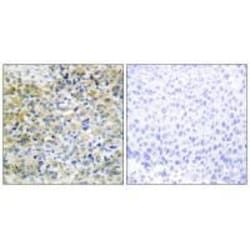


Description
- Predicted to react with Mouse and Rat samples
- Milk lipid globules from humans, cows and rats contain a protein identified as adipocyte differentiation-related protein (ADFP)
- It is associated with the globule surface membrane material
- This protein, previously believed to be specific to adipocytes, is a major constituent of the globule surface and is present in a detergent-insoluble complex that contains butyrophilin and xanthine oxidase
- ADFP (Adipophilin) is found in a wide range of cultured cell lines, including fibroblasts, endothelial and epithelial cells
- In tissues, however, expression of adipophilin is restricted to specific cell types, such as lactating mammary epithelial cells, adrenal cortex cells, Sertoli and Leydig cells of the male reproductive system, and steatosis or fatty change hepatocytes in alcoholic liver cirrhosis
- ADFP may be a possible new marker for the identification of specialized differentiated cells containing lipid droplets and for diseases associated with fat-accumulating cells.