PA550778
OLFM4 Polyclonal Antibody, Invitrogen™
Manufacturer: Thermo Scientific
Select a Size
| Pack Size | SKU | Availability | Price |
|---|---|---|---|
| Each of 1 | PA550778-Each-of-1 | In Stock | ₹ 46,502.50 |
PA550778 - Each of 1
In Stock
Quantity
1
Base Price: ₹ 46,502.50
GST (18%): ₹ 8,370.45
Total Price: ₹ 54,872.95
Antigen
OLFM4
Classification
Polyclonal
Conjugate
Unconjugated
Gene
OLFM4
Gene Alias
Antiapoptotic protein GW112; bA209J19.1; GC1; G-CSF-stimulated clone 1 protein; Gm296; Gm913; GW112; hGC-1; hOLfD; olfactomedin 4; olfactomedin-4; OlfD; OLFM4; OLM4; pPD4; PU.1 difference product 4; UNQ362; UNQ362/PRO698
Host Species
Rabbit
Purification Method
Antigen affinity chromatography
Regulatory Status
RUO
Gene ID (Entrez)
10562
Content And Storage
-20°C
Form
Liquid
Applications
Western Blot
Concentration
0.7 mg/mL
Formulation
PBS with 40% glycerol and 0.05% sodium azide; pH 7.4
Gene Accession No.
Q6UX06
Gene Symbols
OLFM4
Immunogen
Fusion protein corresponding to residues near the C terminal of human olfactomedin 4
Quantity
100 μL
Primary or Secondary
Primary
Target Species
Human
Product Type
Antibody
Isotype
IgG
Related Products

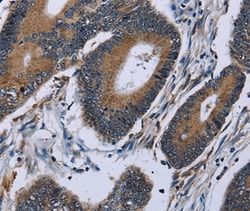
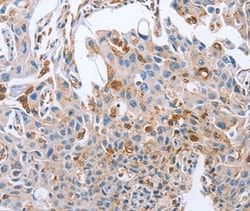

Description
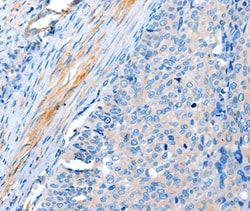
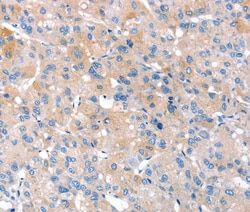
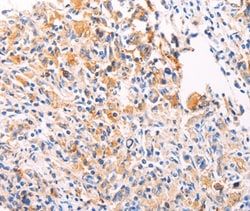
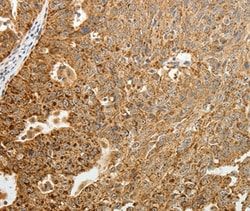
- The antibody detects endogenous levels of total OLFM4 protein
- OLFM4 is a 510 amino acid extracellular matrix glycoprotein belonging to the olfactomedin-related protein family and found to be selectively expressed in inflammed colonic epithelium
- It has one signal peptide, six N-linked glycosylation motif and forms disulfide-bonded multimers
- OLFM4 a transcription factor may have a matrix-related function in differentiation
- Constitutively expressed OLFM4 in cancer cells binds to the potent apoptosis inducer GRIM-19 and has a novel antiapoptotic action and hence might serve as a diagnostic marker for human cancers
- Reports suggest that OLFM4 promotes proliferation of PANC-1 cells by favoring transition from the S to G2/M phase
- Potential interaction of OLFM4 with endogenous cell surface lectins and cadherins may mediate cell adhesion.