FGF12 Polyclonal Antibody, Invitrogen™
Manufacturer: Thermo Scientific
Select a Size
| Pack Size | SKU | Availability | Price |
|---|---|---|---|
| Each of 1 | PA551076-Each-of-1 | In Stock | ₹ 46,057.50 |
PA551076 - Each of 1
In Stock
Quantity
1
Base Price: ₹ 46,057.50
GST (18%): ₹ 8,290.35
Total Price: ₹ 54,347.85
Antigen
FGF12
Classification
Polyclonal
Conjugate
Unconjugated
Gene
Fgf12
Gene Alias
AV114868; B230343J05Rik; FGF; FGF12; FGF-12; FGF12B; FHF1; FHF-1; Fhf1b; Fibroblast growth factor; Fibroblast growth factor 12; fibroblast growth factor 12B; fibroblast growth factor FGF-12b; fibroblast growth factor homologous factor 1; fibroblast growth factor homologous factor 1b; myocyte-activating factor
Host Species
Rabbit
Purification Method
Antigen affinity chromatography
Regulatory Status
RUO
Gene ID (Entrez)
14167, 170630, 2257
Content And Storage
-20° C, Avoid Freeze/Thaw Cycles
Form
Liquid
Applications
ELISA, Western Blot
Concentration
1 mg/mL
Formulation
PBS with 0.5% BSA, 50% glycerol and 0.02% sodium azide; pH 7.4
Gene Accession No.
P61150, P61328, P61329
Gene Symbols
Fgf12
Immunogen
Synthesized peptide derived from the Internal region of human FGF-12.
Quantity
100 μL
Primary or Secondary
Primary
Target Species
Human, Mouse, Rat
Product Type
Antibody
Isotype
IgG
Related Products


Description
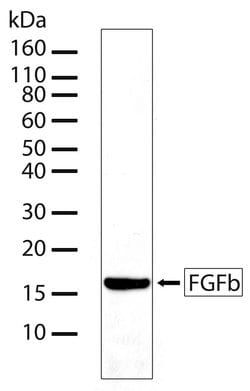
- FGF12 Polyclonal Antibody detects endogenous levels of FGF12 protein
- The protein encoded by this gene is a member of the fibroblast growth factor (FGF) family
- FGF family members possess broad mitogenic and cell survival activities, and are involved in a variety of biological processes, including embryonic development, cell growth, morphogenesis, tissue repair, tumor growth, and invasion
- This growth factor lacks the N-terminal signal sequence present in most of the FGF family members, but it contains clusters of basic residues that have been demonstrated to act as a nuclear localization signal
- When transfected into mammalian cells, this protein accumulated in the nucleus, but was not secreted
- The specific function of this gene has not yet been determined
- Two alternatively spliced transcript variants encoding distinct isoforms have been reported.