Phospho-FAK (Tyr397) Recombinant Rabbit Monoclonal Antibody (31H5L17), Invitrogen™
Manufacturer: Thermo Scientific
Select a Size
| Pack Size | SKU | Availability | Price |
|---|---|---|---|
| Each of 1 | PI700255-Each-of-1 | In Stock | ₹ 50,596.50 |
PI700255 - Each of 1
In Stock
Quantity
1
Base Price: ₹ 50,596.50
GST (18%): ₹ 9,107.37
Total Price: ₹ 59,703.87
Antigen
Phospho-FAK (Tyr397)
Classification
Monoclonal
Concentration
0.5 mg/mL
Formulation
PBS with 0.09% sodium azide
Gene Accession No.
P34152, Q05397
Gene Symbols
PTK2
Immunogen
A peptide corresponding to amino acids 390-401 of Q05397.
Quantity
100 μg
Primary or Secondary
Primary
Target Species
Human, Mouse
Product Type
Antibody
Isotype
IgG
Applications
ELISA, Immunocytochemistry, Immunohistochemistry (Paraffin), Western Blot
Clone
31H5L17
Conjugate
Unconjugated
Gene
PTK2
Gene Alias
CG10023; CG10023-PA; CG10023-PB; CG10023-PC; CG10023-PD; CG10023-PF; CG10023-PG; CT28129; DFAK; DFak56; Dmel\CG10023; Dmel_CG10023; DmFAK; EC 2.7.10.2; Fadk; FADK 1; Fak; Fak1; Fak56; fak56D; FAK65D; Fak-PA; Fak-PB; Fak-PC; Fak-PD; Fak-PF; Fak-PG; FAK-related non-kinase polypeptide; focal adhesion kinase; Focal adhesion kinase 1; focal adhesion kinase homolog; focal adhesion kinase isoform FAK-Del33; focal adhesion kinase pp125FAK; focal adhesion kinase-related nonkinase; focal ashension kinase 1; FRNK; I79_019430; Kiaa4203; mKIAA4203; p125FAK; p41/p43FRNK; pFAK; pp125 PTK2; pp125FAK; PPP1R71; Protein phosphatase 1 regulatory subunit 71; protein phosphatase 1, regulatory subunit 71; protein tyrosine kinase 2; protein tyrosine kinase 2 L homeolog; protein-tyrosine kinase; protein-tyrosine kinase 2; PTK2; PTK2 protein tyrosine kinase 2; ptk2.L; tyrosine kinase; XELAEV_18032408mg; XPFAK
Host Species
Rabbit
Purification Method
Protein A
Regulatory Status
RUO
Gene ID (Entrez)
14083, 5747
Content And Storage
Store at 4°C short term. For long term storage, store at -20°C, avoiding freeze/thaw cycles.
Form
Liquid
Related Products

Description
- This antibody is predicted to react with mouse, rat, primate, bovine, equine, canine, chicken, opossum, zebra finch, zebrafish, Xenopus, and pufferfish based on sequence homology
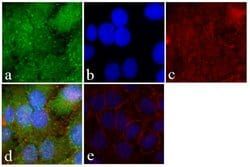
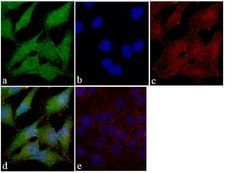
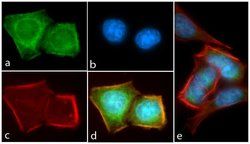
- This antibody was tested in IHC on breast, gastric, and thyroid carcinoma tissue and on HeLa and A549 cells in IF applications
- This antibody has been used as a detector in a sandwich ELISA format
- Recombinant rabbit monoclonal antibodies are produced using in vitro expression systems
- The expression systems are developed by cloning in the specific antibody DNA sequences from immunoreactive rabbits
- Then, individual clones are screened to select the best candidates for production
- The advantages of using recombinant rabbit monoclonal antibodies include: better specificity and sensitivity, lot-to-lot consistency, animal origin-free formulations, and broader immunoreactivity to diverse targets due to larger rabbit immune repertoire
- Focal Adhesion Kinase (FAK) is a 125 kDa non-receptor protein tyrosine kinase that acts as a substrate for Src and is a key element of integrin signaling
- FAK plays an important role in cell spreading, differentiation, migration, cell death, and acceleration of the G1 to S phase transition of the cell cycle
- FAK has a central catalytic domain and a C-terminal tail that localizes it to focal adhesions, which are sites where cells attach to the extracellular matrix via surface integrin receptors
- Increased FAK tyrosine phosphorylation occurs upon integrin engagement with fibronectin
- Adhesion of murine NIH3T3 fibroblasts to fibronectin promotes association of the Grb2 adapter protein and c-Src PTK with FAK in vivo, and also results in activation of the ERK2 MAP kinase
- In v-Src-transformed NIH3T3, the association of v-Src, Grb2, and Sos with FAK is independent of cell adhesion to fibronectin
- In vitro the Grb2 SH2 domain binds directly to tyrosine-phosphorylated FAK, and the binding site has been identified as Tyr925 by site directed mutagenesis
- Several transcript variants encoding different isoforms have been found for the FAK gene, but the full-length natures of only three of them have been determined.