PI701078
FITC Recombinant Rabbit Monoclonal Antibody (6HC5LC9), Invitrogen™
Manufacturer: Thermo Scientific
Select a Size
| Pack Size | SKU | Availability | Price |
|---|---|---|---|
| Each of 1 | PI701078-Each-of-1 | In Stock | ₹ 53,800.50 |
PI701078 - Each of 1
In Stock
Quantity
1
Base Price: ₹ 53,800.50
GST (18%): ₹ 9,684.09
Total Price: ₹ 63,484.59
Antigen
FITC
Classification
Recombinant Monoclonal
Concentration
0.5 mg/mL
Formulation
PBS with 0.09% sodium azide
Host Species
Rabbit
Purification Method
Protein A
Regulatory Status
RUO
Target Species
Chemical
Product Type
Antibody
Isotype
IgG
Applications
Fluorescent Quenching
Clone
6HC5LC9
Conjugate
Unconjugated
Gene Alias
Fluorescein
Immunogen
proprietary
Quantity
100 μg
Primary or Secondary
Primary
Content And Storage
Store at 4°C short term. For long term storage, store at -20°C, avoiding freeze/thaw cycles.
Form
Liquid
Target Molecule
Chemical
Related Products

Description
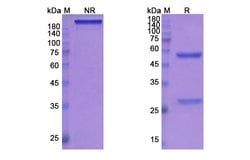
- Intact IgG appears on a non-reducing gel as ∽150 kDa band and upon reduction generating a ∽25 kDa light chain band and a ∽50 kDa heavy chain
- Recombinant rabbit monoclonal antibodies are produced using in vitro expression systems
- The expression systems are developed by cloning in the specific antibody DNA sequences from immunoreactive rabbits
- Then, individual clones are screened to select the best candidates for production
- The advantages of using recombinant rabbit monoclonal antibodies include: better specificity and sensitivity, lot-to-lot consistency, animal origin-free formulations, and broader immunoreactivity to diverse targets due to larger rabbit immune repertoire
- FITC (fluorescein isothiocyanate) is a fluorochrome dye that absorbs μgtraviolet or blue light causing molecules to become excited and emit a visible yellow-green light
- This emission ceases upon removal of the light causing the excitation
- Fluorochrome labeling provides rapid, accurate localization of antigen-antibody interaction when one of the reactants is part of a cell, tissue or other biological structure
- FITC is a commonly used marker for antibodies in immunofluorescent techniques since the conjugation of FITC to proteins is relatively easy and does not, in general, destroy the biological activity of the labeled protein
- FITC is widely used as a hapten to label different proteins
- Anti-FITC antibodies can be used for isolating FITC labeled cells by magnetic microbeads based sorting, as well as removal of background signal.