CEACAM1 Recombinant Polyclonal Antibody (10HCLC), Invitrogen™
Manufacturer: Thermo Scientific
Select a Size
| Pack Size | SKU | Availability | Price |
|---|---|---|---|
| Each of 1 | PI711088-Each-of-1 | In Stock | ₹ 44,544.50 |
PI711088 - Each of 1
In Stock
Quantity
1
Base Price: ₹ 44,544.50
GST (18%): ₹ 8,018.01
Total Price: ₹ 52,562.51
Antigen
CEACAM1
Classification
Recombinant Polyclonal
Concentration
0.5 mg/mL
Formulation
PBS with 0.09% sodium azide; pH 7.2
Gene Accession No.
P13688
Gene Symbols
CEACAM1
Immunogen
Protein corresponding to Human CEACAM (aa 305-429)
Quantity
100 μg
Primary or Secondary
Primary
Target Species
Human
Product Type
Antibody
Isotype
IgG
Applications
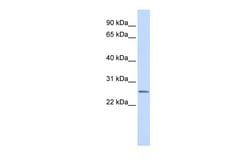
Western Blot
Clone
10HCLC
Conjugate
Unconjugated
Gene
CEACAM1
Gene Alias
antigen CD66; ATP-dependent taurocolate-carrier protein; bb-1; BGP; BGP1; BGP-1; BGPI; BGPR; Biliary glycoprotein 1; biliary glycoprotein D; bone gamma-carboxyglutamic acid (Gla) protein; carcinoembryonic antigen 1; carcinoembryonic antigen 7; carcinoembryonic antigen related cell adhesion molecule 1; carcinoembryonic antigen-related cell adhesion molecule 1; carcinoembryonic antigen-related cell adhesion molecule 1 (biliary glycoprotein); Cc1; C-CAM; C-CAM 105; Ccam1; CD66a; CD66a antigen; Cea1; Cea-1; Cea7; Cea-7; CEACAM1; CEA-related cell adhesion molecule 1; CEA-related cell adhesion molecule 1 (bone gamma-carboxyglutamic acid (Gla) protein) (osteocalcin); Cell-CAM 105; ecto-ATPase; GP110; hepatitis virus (MHV-4) susceptibility; hepatitis virus receptor; Hv2; Hv-2; mCEA1; Mhv-1; MHVR; MHV-R; MHVR1; mmCGM1; mmCGM1a; mmCGM2; murine hepatitis virus receptor; osteocalcin; pp120; pp120/ecto-ATPase
Host Species
Rabbit
Purification Method
Protein A
Regulatory Status
RUO
Gene ID (Entrez)
634
Content And Storage
Store at 4°C short term. For long term storage, store at -20°C, avoiding freeze/thaw cycles.
Form
Liquid
Related Products


Description
- This antibody is predicted to react with Monkey, Horse and Cat Recombinant rabbit polyclonal antibodies are unique offerings from Thermo Fisher Scientific
- They are comprised of a selection of multiple different recombinant monoclonal antibodies, providing the best of both worlds - the sensitivity of polyclonal antibodies with the specificity of monoclonal antibodies - all delivered with the consistency only found in a recombinant antibody
- While functionally the same as a polyclonal antibody - recognizing multiple epitope sites on the target and producing higher detection sensitivity for low abundance targets - a recombinant rabbit polyclonal antibody has a known mixture of light and heavy chains
- The exact population can be produced in every lot, circumventing the biological variability typically associated with polyclonal antibody production
- CEACAM1 is a member of the carcinoembryonic antigen (CEA) gene family, which belongs to the immunoglobulin superfamily
- Two subgroups of the CEA family, the CEA cell adhesion molecules and the pregnancy-specific glycoproteins, are located within a 1.2 Mb cluster on the long arm of chromosome 19
- Eleven pseudogenes of the CEA cell adhesion molecule subgroup are also found in the cluster
- The encoded protein was originally described in bile ducts of liver as biliary glycoprotein
- Subsequently, it was found to be a cell-cell adhesion molecule detected on leukocytes, epithelia, and endothelia
- The encoded protein mediates cell adhesion via homophilic as well as heterophilic binding to other proteins of the subgroup
- Multiple cellular activities have been attributed to the encoded protein, including roles in the differentiation and arrangement of tissue three-dimensional structure, angiogenesis, apoptosis, tumor suppression, metastasis, and the modulation of innate and adaptive immune responses
- Multiple transcript variants encoding different isoforms have been reported, but the full-length nature of only two has been determined.