PIMA134005
CD19 Monoclonal Antibody (HD37), Invitrogen™
Manufacturer: Thermo Scientific
Select a Size
| Pack Size | SKU | Availability | Price |
|---|---|---|---|
| Each of 1 | PIMA134005-Each-of-1 | In Stock | ₹ 47,837.50 |
PIMA134005 - Each of 1
In Stock
Quantity
1
Base Price: ₹ 47,837.50
GST (18%): ₹ 8,610.75
Total Price: ₹ 56,448.25
Antigen
CD19
Classification
Monoclonal
Concentration
0.17 mg/mL
Formulation
PBS with 0.2% BSA and 0.09% sodium azide; pH 7.2
Gene Accession No.
P15391
Gene Symbols
Cd19
Immunogen
Hairy Cell Leukemia Cells
Quantity
500 μL
Primary or Secondary
Primary
Target Species
Human
Product Type
Antibody
Isotype
IgG1
Applications
Flow Cytometry, Immunohistochemistry (Frozen)
Clone
HD37
Conjugate
Unconjugated
Gene
Cd19
Gene Alias
AW495831; B4; B-lymphocyte antigen CD19; B-lymphocyte surface antigen B4; Cd19; CD19 antigen; CD19 molecule; CVID3; differentiation antigen CD19; Leu-12; T-cell surface antigen Leu-12
Host Species
Mouse
Purification Method
Protein A
Regulatory Status
RUO
Gene ID (Entrez)
930
Content And Storage
4° C, do not freeze
Form
Liquid
Related Products



Description
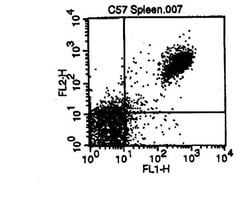
- MA1-34005 detects CD19 from human samples
- CD19 is a member of the immunoglobulin superfamily and has two Ig like domains
- The CD19 molecule is expressed on 100% of the peripheral B cells as defined by expression of kappa or lambda light chains
- CD19 appears to be expressed on myeloid leukemia cells, particularly those of monocytic lineage
- Leukemia phenotype studies have demonstrated that the earliest and broadest B cell restricted antigen is the CD19 antigen
- The receptor for CD19 is an important functional regulator of normal and malignant B cell proliferation, and is expressed in all B cell precursor leukemias
- Lymphocytes proliferate and differentiate in response to various concentrations of different antigens
- The ability of the B cell to respond in a specific, yet sensitive manner to the various antigens is achieved with the use of low-affinity antigen receptors
- CD19 is a cell surface molecule which assembles with the antigen receptor of B lymphocytes in order to decrease the threshold for antigen receptor-dependent stimulation
- Besides being a signal-amplifying coreceptor for the B cell receptor (BCR), CD19 can also signal independently of BCR co-ligation and is a central regulatory component upon which multiple signaling pathways converge
- Mutation of the CD19 gene results in hypogammaglobulinemia, whereas CD19 overexpression causes B cell hyperactivity.