Apolipoprotein A5 Monoclonal Antibody (4H8H8E2), Invitrogen™
Manufacturer: Thermo Scientific
Select a Size
| Pack Size | SKU | Availability | Price |
|---|---|---|---|
| Each of 1 | PIMA146077-Each-of-1 | In Stock | ₹ 47,481.50 |
PIMA146077 - Each of 1
In Stock
Quantity
1
Base Price: ₹ 47,481.50
GST (18%): ₹ 8,546.67
Total Price: ₹ 56,028.17
Antigen
Apolipoprotein A5
Classification
Monoclonal
Concentration
1.2 mg/mL
Formulation
PBS with 0.1% sodium azide
Gene Accession No.
Q6Q788
Gene Symbols
APOA5
Immunogen
Ni-NTA purified full-length recombinant human Apolipoprotein A5 expressed in E Coli strain BL21 (DE3)
Quantity
100 μL
Primary or Secondary
Primary
Target Species
Human
Product Type
Antibody
Isotype
IgG1 κ
Applications
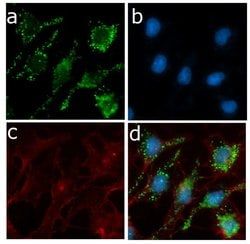
ELISA, Flow Cytometry, Immunocytochemistry
Clone
4H8H8E2
Conjugate
Unconjugated
Gene
APOA5
Gene Alias
1300007O05Rik; APOA5; Apoav; apo-AV; apoA-V; apolipoprotein A5; apolipoprotein AV; Apolipoprotein A-V; apolipoprotein A-V precursor variant 3; apolipoprotein A-V; apolipoprotein A5; FLJ97995; MGC126836; MGC126838; Rap3; Regeneration-associated protein 3; UNQ411/PRO773
Host Species
Mouse
Purification Method
Protein G
Regulatory Status
RUO
Gene ID (Entrez)
116519
Content And Storage
-20° C, Avoid Freeze/Thaw Cycles
Form
Liquid
Related Products

Description
- Suggested positive control: antigen standard for APOA5 (transient overexpression lysate)
- Apolipoprotein A4 (also known as ApoA-IV) is a plasma protein that is O-linked glycoprotein after proteolytic processing
- ApoA4 is a major constituent of HDL and it also can be found on the surface of newly synthesized chylomicrons
- The physiological function of ApoA4 is not completely identified so far, but several evidences from vitro studies indicate that this apolipoprotein involves in several steps of the reverse cholesterol transport pathway, which transports cholesterol from peripheral cells back to the liver.