CD171 Monoclonal Antibody (UJ127), Biotin, Invitrogen™
Manufacturer: Thermo Scientific
Select a Size
| Pack Size | SKU | Availability | Price |
|---|---|---|---|
| Each of 1 | PIMA514137-Each-of-1 | In Stock | ₹ 53,578.00 |
PIMA514137 - Each of 1
In Stock
Quantity
1
Base Price: ₹ 53,578.00
GST (18%): ₹ 9,644.04
Total Price: ₹ 63,222.04
Antigen
CD171
Classification
Monoclonal
Concentration
0.2 mg/mL
Formulation
PBS with 0.2% BSA and 0.09% sodium azide; pH 7.4
Gene Accession No.
P32004
Gene Symbols
L1CAM
Immunogen
Homogenous suspension of 16 week human fetal brain
Quantity
500 μL
Primary or Secondary
Primary
Target Species
Human
Product Type
Antibody
Isotype
IgG1 κ
Applications
Immunohistochemistry (Paraffin), Immunoprecipitation, Western Blot
Clone
UJ127
Conjugate
Biotin
Gene
L1CAM
Gene Alias
antigen identified by monoclonal antibody R1; CAML1; CD 171; CD171; CD171 molecule; HSAS; HSAS1; Hyd; L1; L1 cell adhesion molecule; L1CAM; MASA; MIC5; N-CAM L1; NCAML1; N-CAML1; N-CAM-L1; NCAM-L1; Nerve-growth factor-inducible large external glycoprotein; neural cell adhesion molecule L1; NILE; S10; sCD171; sL1 CAM; sL1CAM; soluble CD 171; soluble CD171; soluble L1 CAM; soluble L1CAM; SPG1
Host Species
Mouse
Purification Method
Protein G
Regulatory Status
RUO
Gene ID (Entrez)
3897
Content And Storage
4° C
Form
Liquid
Related Products


Description
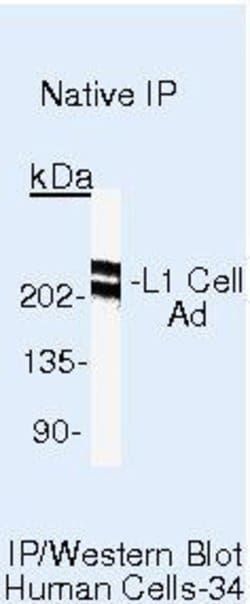
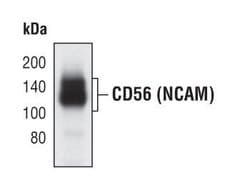
- MA5-14137 targets L1 Cell Adhesion Molecule in IHC (P), IP, and WB applications and shows reactivity with Human samples
- The MA5-14137 immunogen is homogenous suspension of 16 week human fetal brain
- L1CAM/CD171 is an axonal glycoprotein belonging to the immunoglobulin supergene family
- The ectodomain, consisting of several immunoglobulin-like domains and fibronectin-like repeats (type III), is linked via a single transmembrane sequence to a conserved cytoplasmic domain
- This cell adhesion molecule plays an important role in nervous system development, including neuronal migration and differentiation
- Mutations in the gene cause three X-linked neurological syndromes known by the acronym CRASH (corpus callosum hypoplasia, retardation, aphasia, spastic paraplegia and hydrocephalus)
- Alternative splicing of a neuron-specific exon is thought to be functionally relevant.