LPP Monoclonal Antibody (K.114.1), Invitrogen™
Manufacturer: Thermo Scientific
Select a Size
| Pack Size | SKU | Availability | Price |
|---|---|---|---|
| Each of 1 | PIMA514786-Each-of-1 | In Stock | ₹ 41,385.00 |
PIMA514786 - Each of 1
In Stock
Quantity
1
Base Price: ₹ 41,385.00
GST (18%): ₹ 7,449.30
Total Price: ₹ 48,834.30
Antigen
LPP
Classification
Monoclonal
Conjugate
Unconjugated
Gene
LPP
Gene Alias
9430020K16Rik; AA959454; AU024130; B130055L10Rik; C79715; D630048H16; I79_000864; LIM domain containing preferred translocation partner in lipoma; LIM domain-containing preferred translocation partner in lipoma; LIM protein; lipoma preferred partner; Lipoma-preferred partner; Lipoma-preferred partner homolog; Lipoma-preferred-partner; LPP
Host Species
Mouse
Purification Method
Affinity chromatography
Regulatory Status
RUO
Gene ID (Entrez)
100753874, 210126, 4026
Content And Storage
-20°C
Form
Liquid
Applications
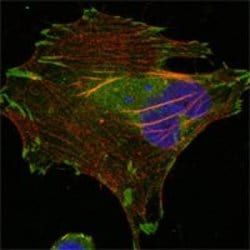
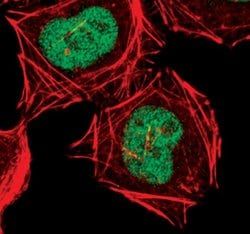
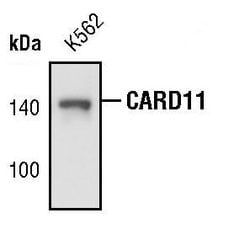
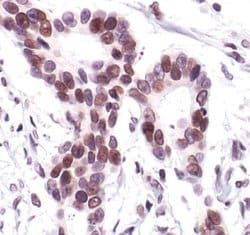
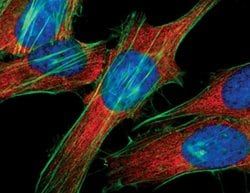
Immunocytochemistry, Immunohistochemistry (Paraffin), Immunoprecipitation, Western Blot
Clone
K.114.1
Formulation
0.01M HEPES with 0.15M NaCl, 100μg/mL BSA, 50% glycerol and <0.02% sodium azide; pH 7.5
Gene Accession No.
Q8BFW7, Q93052
Gene Symbols
LPP
Immunogen
HIS-tagged recombinant fragment of human LPP
Quantity
100 μL
Primary or Secondary
Primary
Target Species
Hamster, Human, Mouse, Non-human Primate
Product Type
Antibody
Isotype
IgG1
Related Products

Description
- It is not recommended to aliquot this antibody
- This gene encodes a member of a subfamily of LIM domain proteins that are characterized by an N-terminal proline rich region and three C-terminal LIM domains
- The encoded protein localizes to the cell periphery in focal adhesions and may be involved in cell-cell adhesion and cell motility
- This protein also shuttles through the nucleus and may function as a transcriptional co-activator
- This gene is located at the junction of certain disease related chromosomal translocations which result in the expression of chimeric proteins that may promote tumor growth
- Alternate splicing results in multiple transcript variants.