DRAK2 Monoclonal Antibody (E.959.6), Invitrogen™
Manufacturer: Thermo Scientific
Select a Size
| Pack Size | SKU | Availability | Price |
|---|---|---|---|
| Each of 1 | PIMA515020-Each-of-1 | In Stock | ₹ 41,385.00 |
PIMA515020 - Each of 1
In Stock
Quantity
1
Base Price: ₹ 41,385.00
GST (18%): ₹ 7,449.30
Total Price: ₹ 48,834.30
Antigen
DRAK2
Classification
Monoclonal
Concentration
123 μg/mL
Formulation
0.01M HEPES with 0.15M NaCl, 100μg/mL BSA, 50% glycerol and <0.02% sodium azide; pH 7.5
Gene Accession No.
Q8BG48
Gene Symbols
STK17B
Immunogen
Synthetic peptide corresponding to residues surrounding
Quantity
100 μL
Primary or Secondary
Primary
Target Species
Mouse
Product Type
Antibody
Isotype
IgG
Applications
Immunohistochemistry (Paraffin), Immunoprecipitation, Western Blot
Clone
E.959.6
Conjugate
Unconjugated
Gene
STK17B
Gene Alias
3110009A03Rik; AI120141; DAP kinase-related apoptosis-inducing protein kinase 2; death-associated protein kinase-related 2; DRAK 2; DRAK2; serine/threonine kinase 17b; serine/threonine kinase 17b (apoptosis-inducing); serine/threonine-protein kinase 17B; ST17B; STK 17B; Stk17b
Host Species
Rabbit
Purification Method
Affinity chromatography
Regulatory Status
RUO
Gene ID (Entrez)
98267
Content And Storage
-20°C
Form
Liquid
Related Products

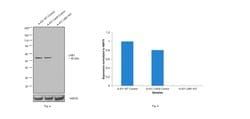
Description
- It is not recommended to aliquot this antibody
- STK17B (also known as DRAK2) is a member of the serine/threonine kinase family and is related to death-associated protein kinase that triggers apoptosis
- STK17B is selectively important for T-cell survival and inhibition of STK17B has therapeutic potential for autoimmune disease
- T-cell survival depends on a balance of T-cell receptor and co-stimulatory signals and deficiency of STK17B can affect autoimmune disease susceptibility without generalized suppression of the immune system
- Protein kinases play important roles in the signal transduction in response to a variety of external stimuli
- Recently, several protein kinases have been identified that may also be involved in apoptotic process
- Overexpression of a serine/threonine kinase, ZIP kinase can cause the morphological changes typical of apoptosis in NIH 3T3 cells
- Sanjo et al, have identified two new protein kinases DRAK1 and DRAK2 (Death Receptor Associated Kinase 1 and 2)
- Both DRAKs and ZIP kinase share significant homology at the amino acid level
- The kinase domains of both DRAKs, ZIP kinase are homologous to DAP (Death-associated protein) kinase, which is involved in the apoptotic signaling induced by interferon-g
- Overexpression of DRAKs in NIH 3T3 cells lead to apoptosis
- These transfection experiments suggest that C-terminal domain of DRAKs are important for induction of apoptosis.