EphA4 Monoclonal Antibody (7D3D4), Invitrogen™
Manufacturer: Thermo Scientific
Select a Size
| Pack Size | SKU | Availability | Price |
|---|---|---|---|
| Each of 1 | PIMA515414-Each-of-1 | In Stock | ₹ 50,062.50 |
PIMA515414 - Each of 1
In Stock
Quantity
1
Base Price: ₹ 50,062.50
GST (18%): ₹ 9,011.25
Total Price: ₹ 59,073.75
Antigen
EphA4
Classification
Monoclonal
Concentration
Conc. Not Determined
Formulation
ascites with 0.03% sodium azide
Gene Accession No.
P54764
Gene Symbols
EPHA4
Immunogen
Purified recombinant fragment of EphA4 (aa777-986) expressed in E. Coli.
Regulatory Status
RUO
Gene ID (Entrez)
2043
Content And Storage
Store at 4°C short term. For long term storage, store at -20°C, avoiding freeze/thaw cycles.
Form
Liquid
Applications
ELISA, Western Blot
Clone
7D3D4
Conjugate
Unconjugated
Gene
EPHA4
Gene Alias
2900005C20Rik; AI385584; Cek8; Cek8 protein; EK8; epa4; EPH receptor A4; Epha4; EPH-like kinase 8; Ephrin type-A receptor 4; Hek8; rb; receptor protein-tyrosine kinase HEK8; RGD1560587; Sek; Sek1; Tyro1; TYRO1 protein tyrosine kinase; tyrosine-protein kinase receptor MPK-3; Tyrosine-protein kinase receptor SEK; tyrosine-protein kinase receptor SEK-1; Tyrosine-protein kinase TYRO1
Host Species
Mouse
Quantity
100 μL
Primary or Secondary
Primary
Target Species
Human
Product Type
Antibody
Isotype
IgG1
Related Products
Description
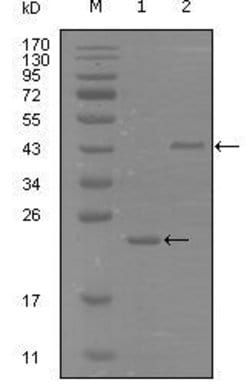
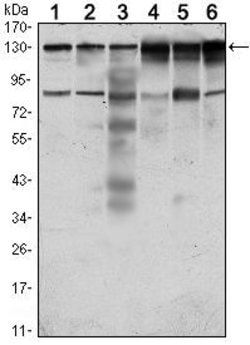
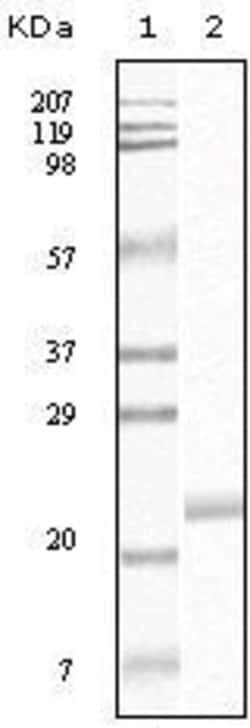
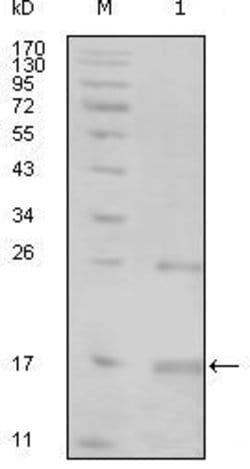
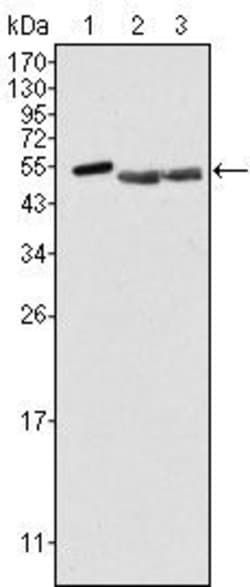
- MA5-15414 targets EphA4 in indirect ELISA, WB applications and shows reactivity with Human samples
- The MA5-15414 immunogen is purified recombinant fragment of EphA4 (aa777-986) expressed in E
- Coli
- <br>
- EPHA4 belongs to the ephrin receptor subfamily of the protein tyrosine kinase family
- EPH and EPH-related receptors have been implicated in mediated developmental events, particularly in the nervous system
- Receptors in the EPH subfamily typically have a single kinase domain and an extracellular region containing a Cys-rich domain and 2 fibronectin type III repeats
- The ephrin receptors are divided into 2 groups based on the similarity of their extracellular domain sequences and their affinities for binding ephrin-A and ephrin-B ligands
- EphA4 encodes a protein that binds ephrin-A ligands.