PTK7 Monoclonal Antibody (4F9), Invitrogen™
Manufacturer: Thermo Scientific
Select a Size
| Pack Size | SKU | Availability | Price |
|---|---|---|---|
| Each of 1 | PIMA515669-Each-of-1 | In Stock | ₹ 52,287.50 |
PIMA515669 - Each of 1
In Stock
Quantity
1
Base Price: ₹ 52,287.50
GST (18%): ₹ 9,411.75
Total Price: ₹ 61,699.25
Antigen
PTK7
Classification
Monoclonal
Concentration
Conc. Not Determined
Formulation
ascites with 0.03% sodium azide
Gene Accession No.
Q13308
Gene Symbols
Ptk7
Immunogen
Purified recombinant fragment of human PTK7 expressed in E. Coli.
Regulatory Status
RUO
Gene ID (Entrez)
5754
Content And Storage
Store at 4°C short term. For long term storage, store at -20°C, avoiding freeze/thaw cycles.
Form
Liquid
Applications
ELISA, Immunohistochemistry, Western Blot
Clone
4F9
Conjugate
Unconjugated
Gene
Ptk7
Gene Alias
8430404F20Rik; CCK4; CCK-4; chz; Colon carcinoma kinase 4; inactive tyrosine-protein kinase 7; mPTK7/CCK4; protein chuzhoi; protein tyrosine kinase 7; protein tyrosine kinase 7 (inactive); protein-tyrosine kinase 7; Pseudo tyrosine kinase receptor 7; Ptk7; PTK7 protein tyrosine kinase 7; receptor tyrosine kinase-like protein; serum response factor; Srf; Tyrosine-protein kinase-like 7
Host Species
Mouse
Quantity
100 μL
Primary or Secondary
Primary
Target Species
Human
Product Type
Antibody
Isotype
IgG1
Related Products
Description
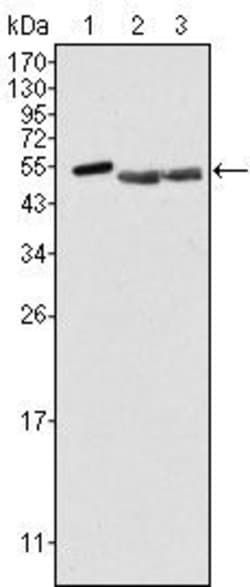
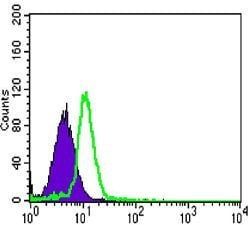
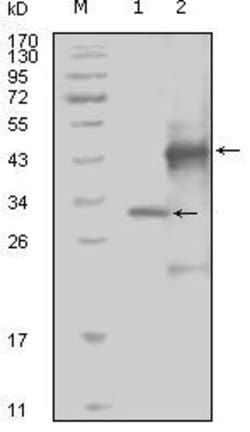
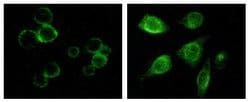
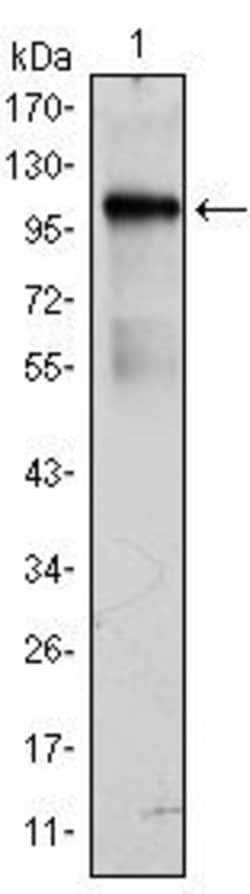
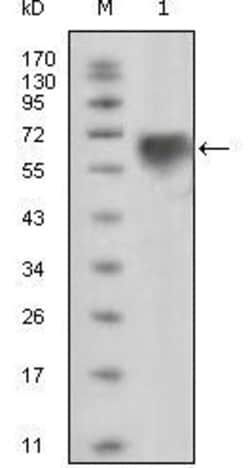
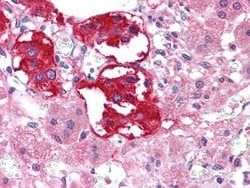
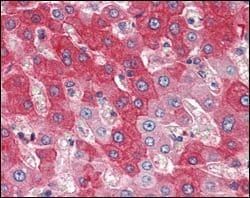
- MA5-15669 targets PTK7 in indirect ELISA, IHC and WB applications and shows reactivity with Human samples
- The MA5-15669 immunogen is purified recombinant fragment of human PTK7 expressed in E
- Coli
- MA5-15669 detects PTK7 which has a predicted molecular weight of approximately 118kDa
- CCK4 may function as a cell adhesion molecule
- Although it belongs to the insulin receptor subfamily of the Tyr protein kinases, it likely lacks the catalytic activity of a tyrosine kinase
- It may be connected to the pathophysiology of colon carcinomas and/or may represent a tumor progression marker
- This Type I membrane protein is highly expressed in lung, liver, pancreas, kidney, placenta and melanocytes, but weakly expressed in thyroid gland, ovary, brain, heart and skeletal muscle, and not in colon
- It is also expressed in erythroleukemia cells.