PIMA515439
HPV Type 16 E7 Monoclonal Antibody (3D6F1), Invitrogen™
Manufacturer: Thermo Scientific
Select a Size
| Pack Size | SKU | Availability | Price |
|---|---|---|---|
| Each of 1 | PIMA515439-Each-of-1 | In Stock | ₹ 49,795.50 |
PIMA515439 - Each of 1
In Stock
Quantity
1
Base Price: ₹ 49,795.50
GST (18%): ₹ 8,963.19
Total Price: ₹ 58,758.69
Antigen
HPV Type 16 E7
Classification
Monoclonal
Concentration
Conc. Not Determined
Formulation
ascites with 0.03% sodium azide
Host Species
Mouse
Quantity
100 μL
Primary or Secondary
Primary
Content And Storage
Store at 4°C short term. For long term storage, store at -20°C, avoiding freeze/thaw cycles.
Form
Liquid
Applications
ELISA, Western Blot
Clone
3D6F1
Conjugate
Unconjugated
Gene Alias
HPV 16-E7; HPV16E7; human papillomavirus
Immunogen
Purified recombinant full-lenght E7 expressed in E. Coli.
Regulatory Status
RUO
Target Species
Virus
Product Type
Antibody
Isotype
IgG1
Related Products
Description
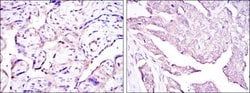
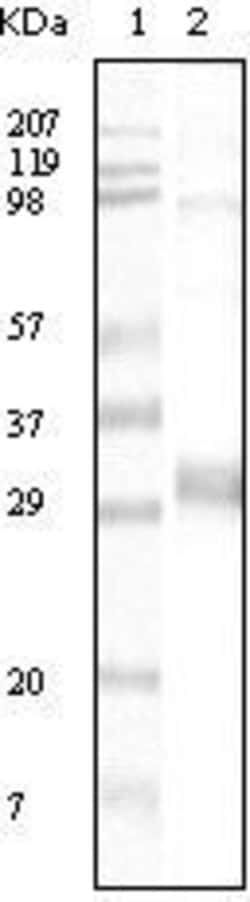
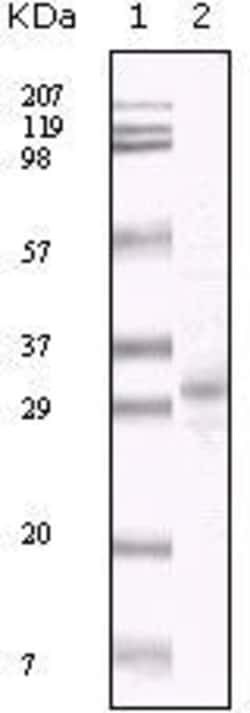
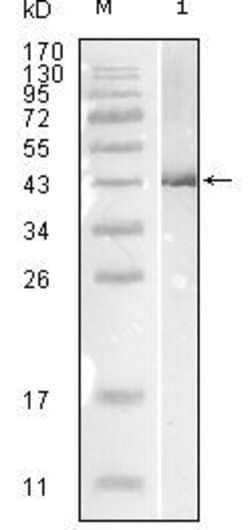
- MA5-15439 targets E7 in indirect ELISA, WB applications and shows reactivity with Tag samples
- The MA5-15439 immunogen is purified recombinant fragment of E7 expressed in E
- Coli.<br>
- The HPV E7 proteins are small (HPV16 E7 comprising 98 amino acids, 15kDa), zinc binding phosphoproteins which are localised in the nucleus
- They are structurally and functionally similar to the E1A protein of subgenus C adenoviruses
- The first 16 amino-terminal amino acids of HPV16 E7 contain a region homologous to a segment of the conserved region 1 (CR1) of the E1A protein of subgenus C adenoviruses
- The next domain, up to amino acid 37, is homologous to the entire region 2 (CR2) of E1A
- Genetic studies have established that these domains are required for cell transformation in vitro, suggesting similarities in the mechanism of transformation by these viruses
- The CR2 homology region contains the LXCXE motif (residues 22-26) involved in binding to the tumour suppressor protein pRb.