FIBB Monoclonal Antibody (1F9), Invitrogen™
Manufacturer: Thermo Scientific
Select a Size
| Pack Size | SKU | Availability | Price |
|---|---|---|---|
| Each of 1 | PIMA515519-Each-of-1 | In Stock | ₹ 50,062.50 |
PIMA515519 - Each of 1
In Stock
Quantity
1
Base Price: ₹ 50,062.50
GST (18%): ₹ 9,011.25
Total Price: ₹ 59,073.75
Antigen
FIBB
Classification
Monoclonal
Concentration
Conc. Not Determined
Formulation
ascites with 0.03% sodium azide
Gene Accession No.
P02675
Gene Symbols
Fgb
Immunogen
Purified recombinant fragment of human FGB (aa30-300) expressed in E. Coli.
Regulatory Status
RUO
Gene ID (Entrez)
2244
Content And Storage
Store at 4°C short term. For long term storage, store at -20°C, avoiding freeze/thaw cycles.
Form
Liquid
Applications
ELISA, Western Blot
Clone
1F9
Conjugate
Unconjugated
Gene
Fgb
Gene Alias
2510049G14Rik; Ab1-181; Ab1-216; Ac1-581; B beta polypeptide; beta-fibrinogen; epididymis secretory sperm binding protein Li 78p; Fgb; fibrinogen; Fibrinogen beta chain; fibrinogen, B beta polypeptide; fibrinogen, beta polypeptide; Fibrinopeptide B; HEL-S-78p; Liver regeneration-related protein LRRG036/LRRG043/LRRG189; MGC104327; MGC120405
Host Species
Mouse
Quantity
100 μL
Primary or Secondary
Primary
Target Species
Human
Product Type
Antibody
Isotype
IgG1
Related Products
Description
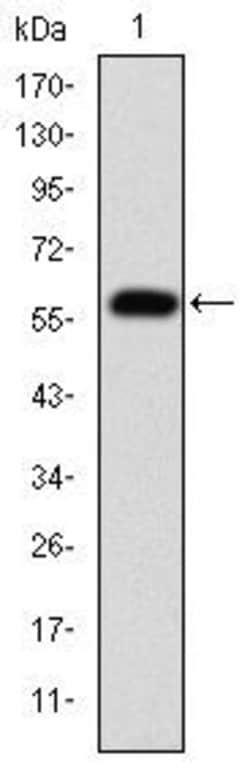
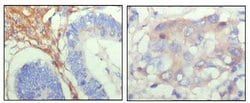
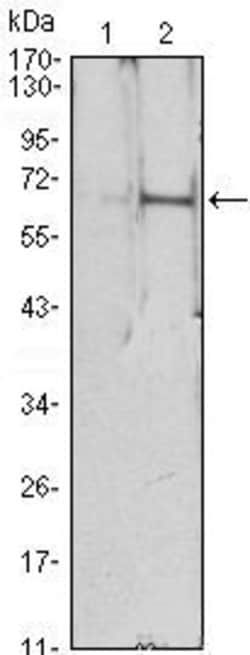
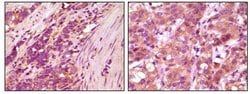
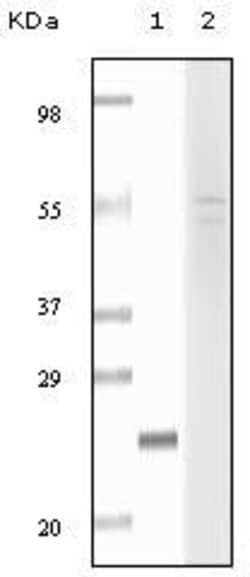
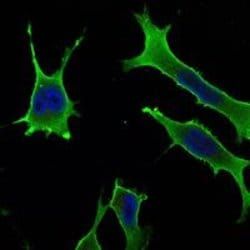
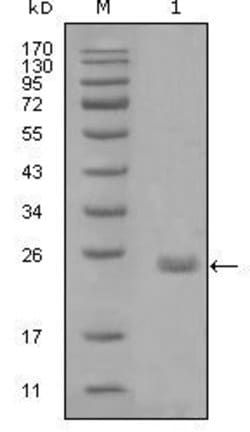
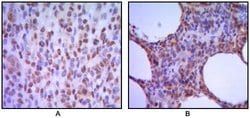
- MA5-15519 targets FGB in indirect ELISA, WB applications and shows reactivity with Human samples
- The MA5-15519 immunogen is purified recombinant fragment of human FGB (aa30-300) expressed in E
- Coli
- MA5-15519 detects FGB which has a predicted molecular weight of approximately 52kDa
- FIBB is the beta component of fibrinogen, a blood-borne glycoprotein comprised of three pairs of nonidentical polypeptide chains
- Following vascular injury, fibrinogen is cleaved by thrombin to form fibrin which is the most abundant component of blood clots
- In addition, various cleavage products of fibrinogen and fibrin regulate cell adhesion and spreading, display vasoconstrictor and chemotactic activities, and are mitogens for several cell types
- Mutations in its gene lead to several disorders, including afibrinogenemia, dysfibrinogenemia, hypodysfibrinogenemia and thrombotic tendency.