Fibrinogen gamma Monoclonal Antibody (5A6), Invitrogen™
Manufacturer: Thermo Scientific
Select a Size
| Pack Size | SKU | Availability | Price |
|---|---|---|---|
| Each of 1 | PIMA515902-Each-of-1 | In Stock | ₹ 52,732.50 |
PIMA515902 - Each of 1
In Stock
Quantity
1
Base Price: ₹ 52,732.50
GST (18%): ₹ 9,491.85
Total Price: ₹ 62,224.35
Antigen
Fibrinogen gamma
Classification
Monoclonal
Concentration
Conc. Not Determined
Formulation
ascites with 0.03% sodium azide
Gene Accession No.
P02679, Q8VCM7
Gene Symbols
Fgg
Immunogen
Purified recombinant fragment of human FGG expressed in E. Coli.
Regulatory Status
RUO
Gene ID (Entrez)
2266, 99571
Content And Storage
Store at 4°C short term. For long term storage, store at -20°C, avoiding freeze/thaw cycles.
Form
Liquid
Applications
ELISA, Immunocytochemistry, Western Blot
Clone
5A6
Conjugate
Unconjugated
Gene
Fgg
Gene Alias
3010002H13Rik; AI256424; FGG; fibg; fibrinogen; fibrinogen gamma chain; Fibrinogen gamma-B chain; fibrinogen gamma-chain; fibrinogen, gamma polypeptide; gamma'; gamma-fibrinogen; PRO2061; testicular tissue protein Li 70; Unknown (protein for MGC:127951)
Host Species
Mouse
Quantity
100 μL
Primary or Secondary
Primary
Target Species
Human, Mouse
Product Type
Antibody
Isotype
IgG2b
Related Products
Description
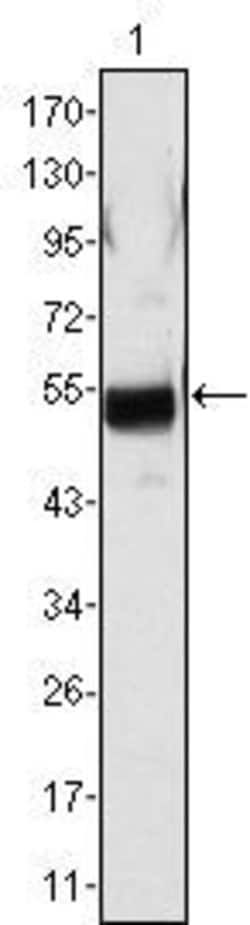
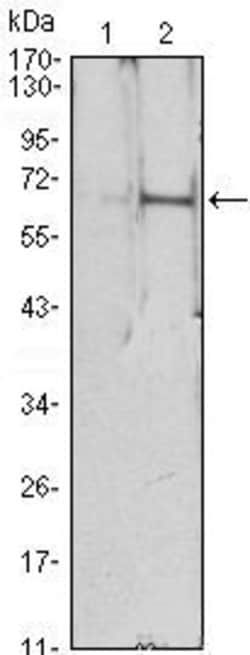
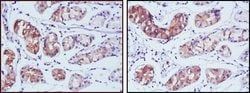
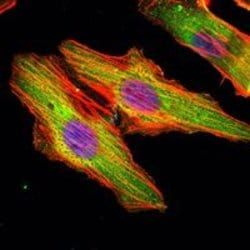
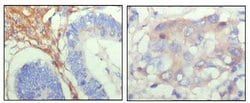
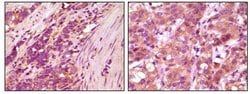
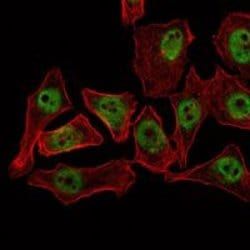
- MA5-15902 targets FGG in indirect ELISA, IF and WB applications and shows reactivity with Human samples
- The MA5-15902 immunogen is purified recombinant fragment of human FGG expressed in E
- Coli
- MA5-15902 detects FGG which has a predicted molecular weight of approximately 52kDa
- The protein encoded by this gene is the gamma component of fibrinogen, a blood-borne glycoprotein comprised of three pairs of nonidentical polypeptide chains
- Following vascular injury, fibrinogen is cleaved by thrombin to form fibrin which is the most abundant component of blood clots
- In addition, various cleavage products of fibrinogen and fibrin regulate cell adhesion and spreading, display vasoconstrictor and chemotactic activities, and are mitogens for several cell types
- Mutations in this gene lead to several disorders, including dysfibrinogenemia, hypofibrinogenemia and thrombophilia
- Alternative splicing results in two transcript variants encoding different isoforms.