Placental Alkaline Phosphatase Recombinant Rabbit Monoclonal Antibody (SP15), Invitrogen™
Manufacturer: Thermo Scientific
Select a Size
| Pack Size | SKU | Availability | Price |
|---|---|---|---|
| Each of 1 | PIMA516392-Each-of-1 | In Stock | ₹ 47,036.50 |
PIMA516392 - Each of 1
In Stock
Quantity
1
Base Price: ₹ 47,036.50
GST (18%): ₹ 8,466.57
Total Price: ₹ 55,503.07
Antigen
Placental Alkaline Phosphatase
Classification
Recombinant Monoclonal
Concentration
0.021 mg/mL
Formulation
PBS with 1% BSA and 0.1% sodium azide; pH 7.2
Gene Accession No.
P05187
Gene Symbols
ALPP
Immunogen
Recombinant protein encoding human placental alkaline phosphatase.
Quantity
500 μL
Primary or Secondary
Primary
Target Species
Human
Product Type
Antibody
Isotype
IgG
Applications
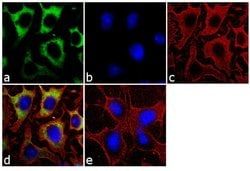
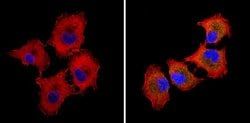
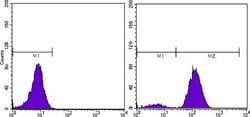
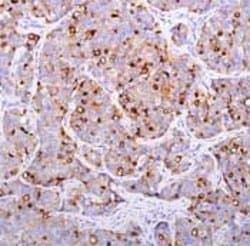
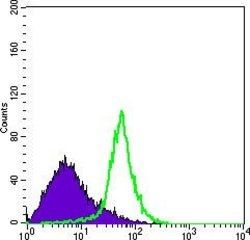
Flow Cytometry, Immunohistochemistry (Paraffin)
Clone
SP15
Conjugate
Unconjugated
Gene
ALPP
Gene Alias
Alkaline phosphatase placental type; Alkaline phosphatase Regan isozyme; alkaline phosphatase, placental; alkaline phosphatase, placental type; alkaline phosphomonoesterase; ALP; Alp1; ALPP; AP-TNAP; DOA1; FLJ11281; FLJ40094; FLJ61142; FLJ93059; Germ-cell alkaline phosphatase; glycerophosphatase; HOPS; MGC161443; MGC167935; nagao Isozyme; P PLAP; PALP; PLA2P; PLAA; placental alkaline phosphatase 1; placental heat-stable alkaline phosphatase; PLAP; PLAP1; PLAP-1; rCG23846-like; Regan isozyme; TNAP; TNSALP
Host Species
Rabbit
Purification Method
Protein A
Regulatory Status
RUO
Gene ID (Entrez)
250
Content And Storage
Store at 4°C short term. For long term storage, store at -20°C, avoiding freeze/thaw cycles.
Form
Liquid
Related Products

Description
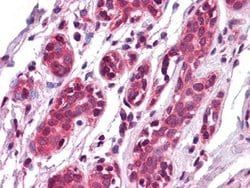
- Heat-mediated antigen retrieval is recommended prior to staining, using a 10mM citrate buffer, pH 6.0, for 10 minutes followed by cooling at room temperature for 20 min
- Following antigen retrieval, incubate samples with primary antibody for 30 min at room temperature
- A suggested positive control is seminoma or placenta tissue
- Placental Alkaline Phosphatase plays an important role in the regulation of specific inflammatory disease processes
- There are at least four distinct but related alkaline phosphatases: intestinal, placental, placental-like, and liver/bone/kidney for this form of alkaline phosphatase have been well characterized
- Placental Alkaline Phosphatase reacts with a membrane-bound isoenzyme (Regan and Nagao type) of Placental Alkaline Phosphatase (PLAP) occurring in the placenta during the 3rd trimester of gestation
- Placental Alkaline Phosphatase is useful in the identification of testicular germ cell tumors
- Unlike germ cell tumors, PLAP-positive somatic cell tumors uniformly express epithelial membrane antigen (EMA)
- A proposed function of Placental Alkaline Phosphatase is matrix mineralization; however, mice that lack a functional form of this enzyme show normal skeletal development
- Placental Alkaline Phosphatase has been linked directly to hypophosphatasia, a disorder that is characterized by hypercalcemia and includes skeletal defects
- The character of hypophosphatasia can vary, however, depending on the specific mutation since this determines age of onset and severity of symptoms.