F4/80 Monoclonal Antibody (Cl:A3-1), Invitrogen™
Manufacturer: Thermo Scientific
Select a Size
| Pack Size | SKU | Availability | Price |
|---|---|---|---|
| Each of 1 | PIMA516629-Each-of-1 | In Stock | ₹ 1,06,800.00 |
PIMA516629 - Each of 1
In Stock
Quantity
1
Base Price: ₹ 1,06,800.00
GST (18%): ₹ 19,224.00
Total Price: ₹ 1,26,024.00
Antigen
F4/80
Classification
Monoclonal
Concentration
1 mg/mL
Formulation
PBS with 0.09% sodium azide
Gene Accession No.
Q61549
Gene Symbols
ADGRE1
Immunogen
Thioglycollate stimulated peritoneal macrophages from C57/BL mice.
Quantity
500 μg
Primary or Secondary
Primary
Target Species
Mouse
Product Type
Antibody
Isotype
IgG2b
Applications
Flow Cytometry, Immunocytochemistry, Immunohistochemistry, Immunohistochemistry (Frozen), Immunohistochemistry (Paraffin), Immunomicroscopy, Immunoprecipitation, Radioimmune Assays (RIA), Western Blot
Clone
Cl:A3-1
Conjugate
Unconjugated
Gene
ADGRE1
Gene Alias
ADGRE1; Adhesion G protein-coupled receptor E1; Adhesion G protein-coupled receptor E2; cell surface glycoprotein EMR1; cell surface glycoprotein F4/80; DD7A5-7; EGF-like module containing, mucin-like, hormone receptor-like 1; EGF-like module containing, mucin-like, hormone receptor-like sequence 1; EGF-like module receptor 1; EGF-like module-containing mucin-like hormone receptor-like 1; EGF-TM7; Emr1; EMR1 hormone receptor; F4/80; Gpf480; Ly71; lymphocyte antigen 71; TM7LN3
Host Species
Rat
Purification Method
Protein G
Regulatory Status
RUO
Gene ID (Entrez)
13733
Content And Storage
Store at 4°C short term. For long term storage, store at -20°C, avoiding freeze/thaw cycles.
Form
Liquid
Related Products

Description
- This product requires pre-treatment of paraffin sections prior to staining
- Proteinase K is recommended for tissues fixed for less than 24 hrs
- Citrate buffer (pH 6.0) is recommended for tissues fixed for more than 24 hrs
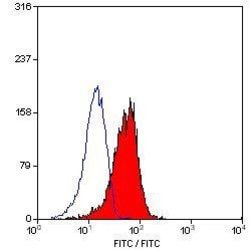
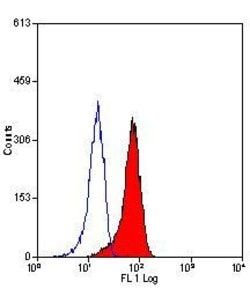
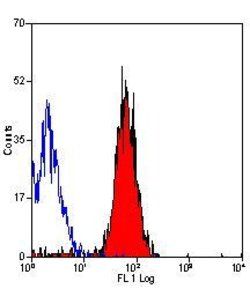
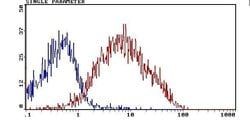
- For FACS analysis, use 10 μL of the suggested working dilution to label 1x10^6 cells in 100 μL
- Rat anti mouse F4/80 antibody, clone Cl:A3-1 recognizes the murine F4/80 antigen, a approximately 160 kDa cell surface glycoprotein member of the EGF-TM7 family of proteins which shares 68% overall amino acid identity with human EGF module-containing mucin-like hormone receptor 1 (EMR1)
- Rat anti mouse F4/80 antibody, clone Cl:A3-1 recognizes the murine F4/80 antigen, a approximately 160 kDa cell surface glycoprotein member of the EGF-TM7 family of proteins which shares 68% overall amino acid identity with human EGF module-containing mucin-like hormone receptor 1 (EMR1)
- Rat anti mouse F4/80 antibody, clone Cl:A3-1 recognizes the murine F4/80 antigen, a approximately 160 kDa cell surface glycoprotein member of the EGF-TM7 family of proteins which shares 68% overall amino acid identity with human EGF module-containing mucin-like hormone receptor 1 (EMR1)
- F4/80 antigen is a 160 kDa cell surface glycoprotein that is a member of the EGF TM7 family of proteins and shares 68% overall amino acid identity with human EGF module containing mucin like hormone receptor 1 (EMR1)
- Expression of F4/80 is heterogeneous and is reported to vary during macrophage maturation and activation
- The F4/80 antigen is expressed on a wide range of mature tissue macrophages including Kupffer cells, Langerhans, microglia, macrophages located in the gut lamina propria, peritoneal cavity, lung, thymus, bone marrow stroma and macrophages in the red pulp of the spleen
- F4/80 expression has also been reported on a subpopulation of dendritic cells but is absent from macrophages located in T cell areas of the spleen and lymph node
- The ligands and biological functions of the F4/80 antigen have not yet been determined but recent studies suggest a role for F4/80 in the generation of efferent CD8+ve regulatory T cells.